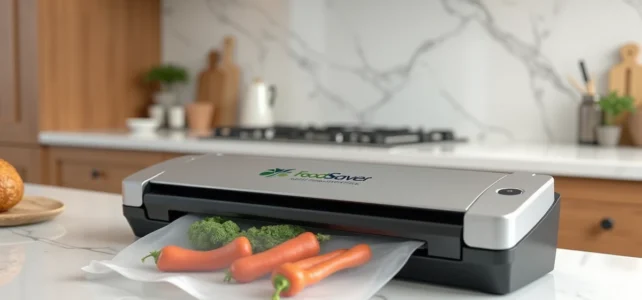
The FoodSaver V2860-I remains referenced in many comparisons of vacuum machines, while recent guides are turning towards updated generalist selections. This clamshell model, designed for home use, maintains a loyal user base. The content available online extensively details its power ratings and suction speed, but leaves several practical constraints that weigh on the daily experience in the shadows.
FoodSaver Proprietary Consumables: The True Long-Term Cost
Most online tests of the V2860-I focus on the sealing quality and suction speed. Few address the issue of consumables, which is a recurring and determining budget item.
Related reading : Origin and manufacturing country of the Eastpak brand: what you need to know
FoodSaver uses a system of branded rolls and bags, sized for its devices. Compatibility with generic bags exists, but user feedback varies on this point: some users report less reliable seals with third-party bags, while others notice no significant difference. The cost of FoodSaver consumables significantly exceeds that of generic bags over several months of regular use.
For those considering intensive use (weekly batch cooking, freezing family portions), this additional cost should be factored into the overall budget. A detailed comparison of the foodsaver v2860 and reviews allows for measuring this economic dimension against competing models that accept universal bags without restriction.
See also : Everything You Need to Know About Compensation in Case of Business Closure: Calculation and Amount
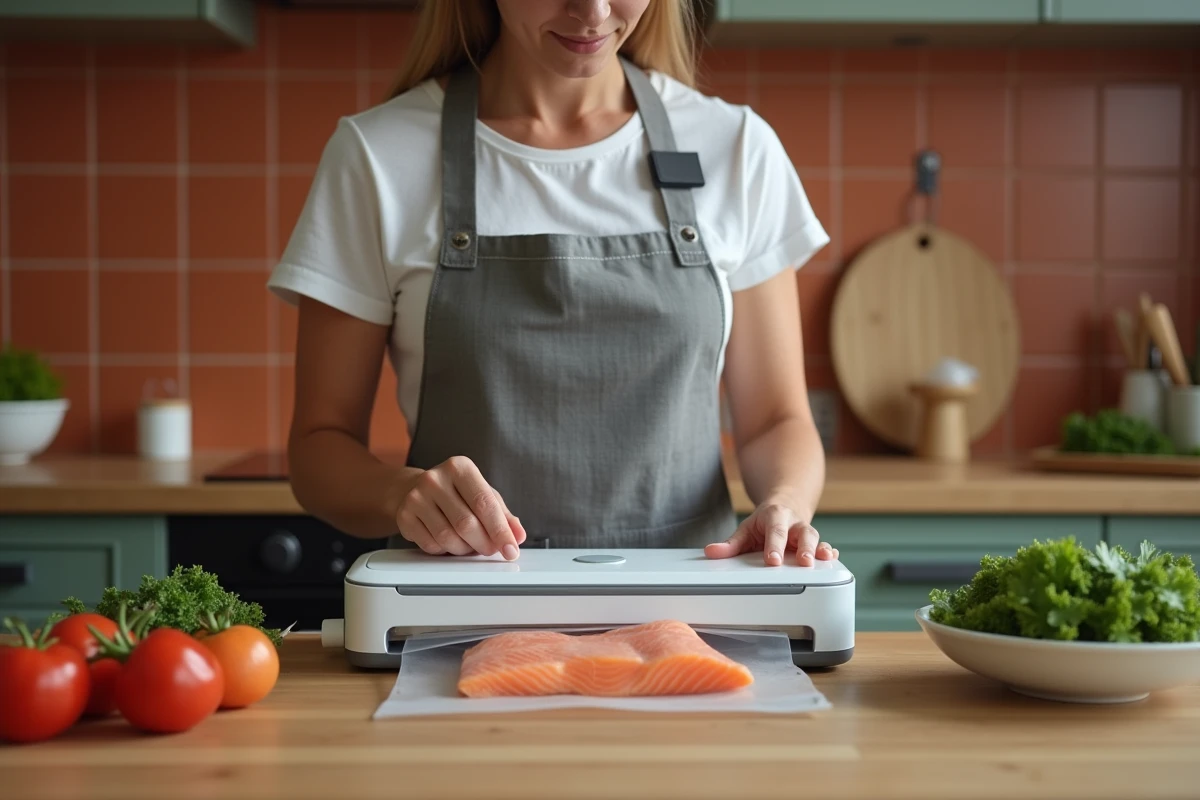
FoodSaver V2860-I for Batch Cooking and Long-Term Freezing
Existing comparisons present the V2860-I as a versatile machine suitable for food preservation. The angle of batch cooking, which has become a common practice, is rarely addressed in direct relation to this model.
Batch cooking involves sealing several portions in series, often in the same preparation session. Two features of the V2860-I come into play here:
- The machine offers several suction speeds, allowing for power adjustment based on the fragility of the food (cooked vegetables, marinated meats, saucy dishes)
- The integrated cutting system on the rolls facilitates the preparation of custom bags without wasting film
- The manual impulse sealing option provides additional control for moist foods or very filled portions
However, the sealing rate is limited by a heating time between cycles. Over a session of ten to fifteen bags, this accumulated time becomes noticeable. Comparable external suction machines do not all have this constraint.
For long-term freezing, the sealing quality of the V2860-I is regularly praised. A hermetic seal effectively protects against freezer burn, and the two sealing levels available on this model allow for double sealing for storage over several months.
Size and Vertical Storage of the V2860-I
The clamshell format of the V2860-I is presented as a storage advantage. The machine folds vertically, freeing up counter space once use is complete. This point is mentioned in all positive reviews.
The reality deserves a nuance. The device remains bulky even when folded. Its footprint exceeds that of most compact external suction machines that have appeared in recent years. For a kitchen with limited counter space, the gain from vertical storage does not always compensate for the depth it occupies.
Recent compact models (gun-shaped or flat case) sometimes take up half the space. The trade-off: their suction power is often lower, and their sealing width is narrower. The choice thus depends on the relationship between usage frequency and available space.

Reliability of the V2860-I and Availability in 2026
The FoodSaver V2860-I no longer appears in the “best vacuum machines 2025” selections of major French buying guides. Recent comparisons have shifted towards newer models, often equipped with updated connectivity or quieter pumps.
This lack of recent coverage raises a concrete question: the availability of the V2860-I as new is becoming uncertain in traditional distribution channels. The available data does not allow for a conclusion on a potential production halt, but the model is increasingly found on the second-hand market or through residual stocks.
For a buyer in 2026, this situation has two direct consequences:
- After-sales service and manufacturer warranty may vary by retailer, with increased risk on older stocks
- Supply of specific accessories (jar adapter, external nozzle) may become more unpredictable than for a model still in active catalog
- Recent and independent user feedback is becoming rarer, making long-term reliability assessment more difficult
The reviews still visible online are mostly evaluations from specialized sites, not user feedback dated from the last two years. The absence of a recent corpus of independent reviews limits the comparative value for those seeking a reliable device over time.
What the V2860-I Does Well, and What It No Longer Does
The sealing quality, versatility of suction settings, and mechanical robustness of the V2860-I remain solid points. For regular home use without cadence constraints, the device fulfills its role.
The vacuum machine market has evolved towards more compact devices, compatible with universal bags, and better documented by updated user feedback. The V2860-I retains its technical qualities, but its positioning in 2026 faces questions of availability and usage cost that older tests did not address.