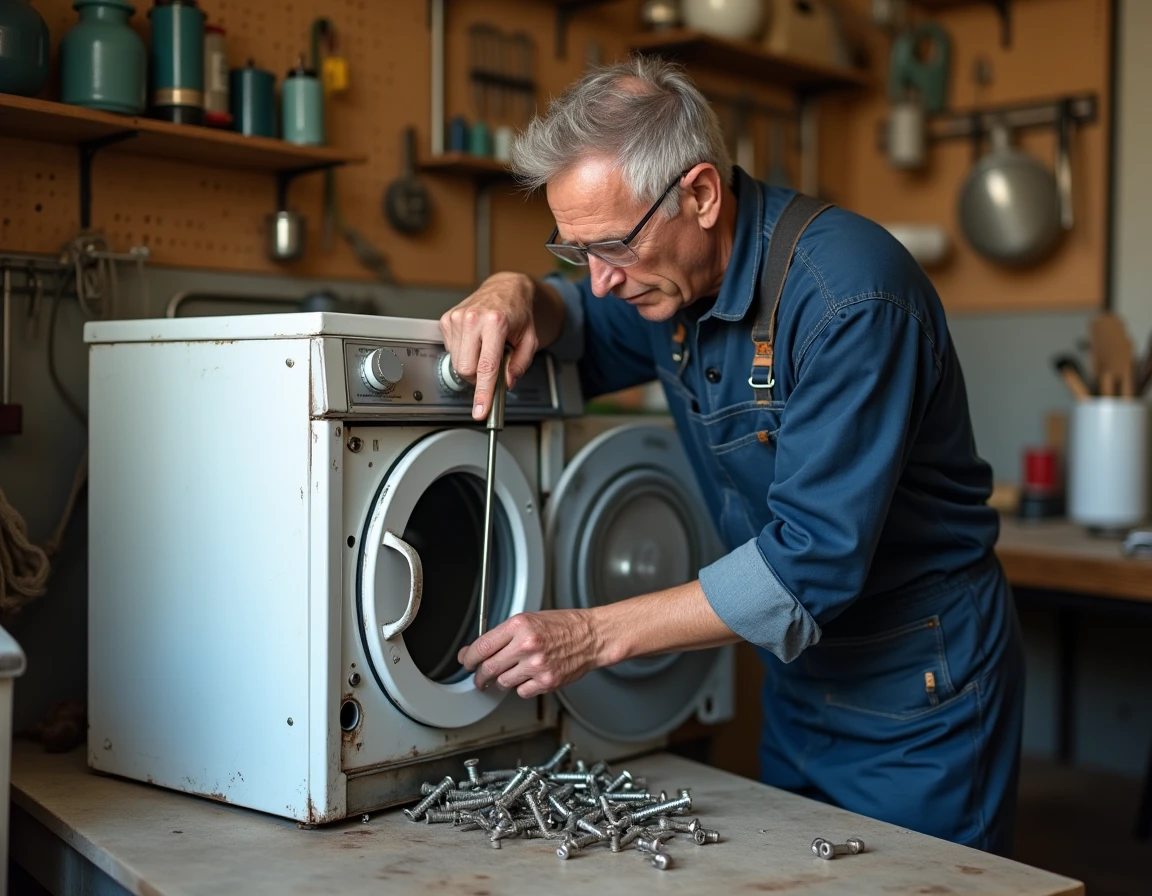
A washing machine with a broken bearing, a microwave that no longer heats, a vacuum cleaner with a failed electronic board: a breakdown does not mean the end of the appliance. However, the decision to repair, opt for reuse, or direct towards recycling is based on technical and economic criteria that most consumer guides overlook.
Break-even point for appliance repair: the calculation that no one details

We recommend conducting a diagnosis before making any decisions. The question is not “Is my appliance repairable?”, but does the cost of repair exceed the residual value of the appliance.
For a mid-range dishwasher, replacing a circulation pump often costs less than a new appliance. In contrast, for small appliances (food processor, coffee grinder), the labor cost combined with the price of the spare part can reach or exceed the purchase price of an equivalent refurbished model.
The relevant ratio to remember: when the repair exceeds half the price of a new one, reuse becomes the most sensible option. This threshold is not arbitrary. It incorporates the estimated remaining lifespan after intervention, the availability of parts, and the complexity of disassembly.
Specialized platforms like Refair allow for quick identification of whether an appliance merits intervention or if it is better to opt for refurbished equipment, by cross-referencing these technical parameters.
Decision-making framework for repair, reuse, or recycling: the technical decision grid
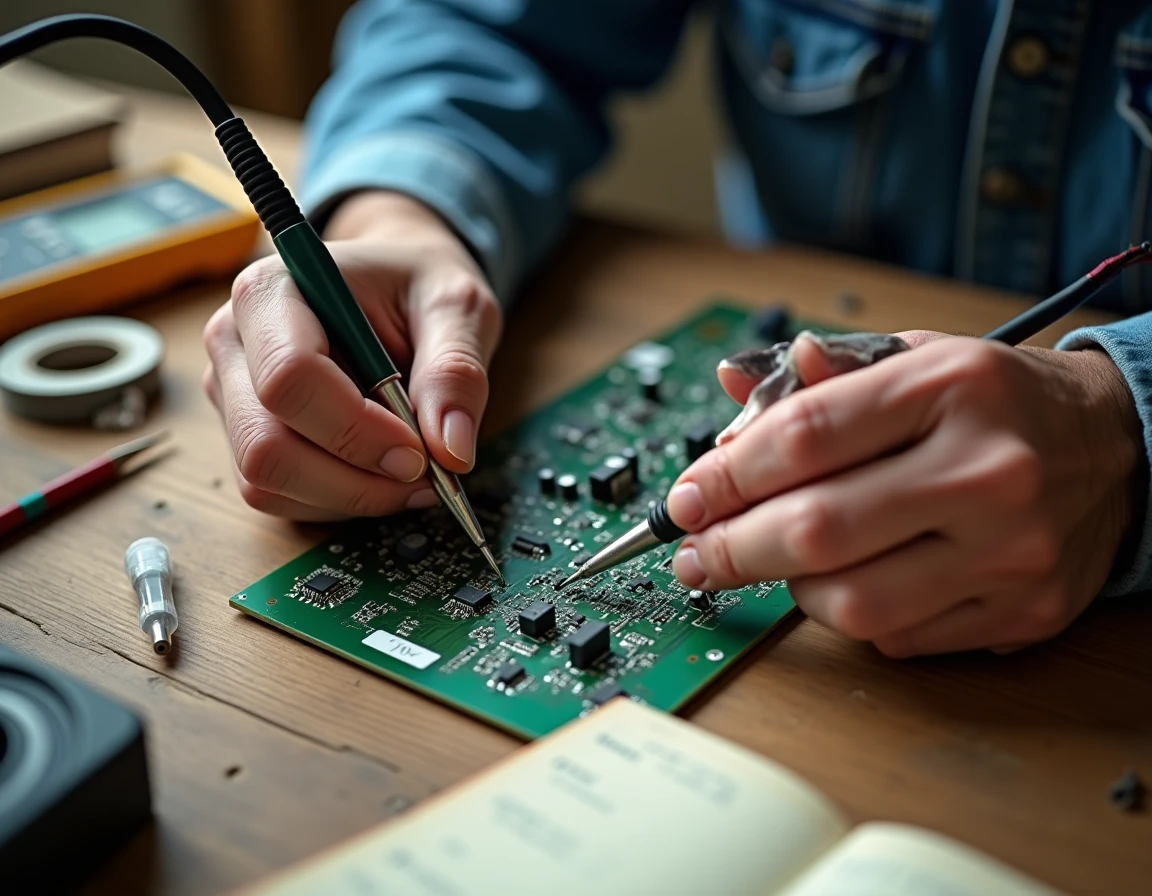
The institutional hierarchy (repair, reuse, recycle) is clear on paper. In practice, it encounters ambiguous situations that we regularly face.
When repair is necessary
- The breakdown concerns an identified wear part (door seal, heating element, belt, filter): the cost remains low and the post-repair lifespan is comparable to that of a new appliance.
- The manufacturer or a spare parts distributor still references the components. The law requires manufacturers to provide certain parts for a defined period after market release.
- The appliance belongs to a range whose design facilitates disassembly (screw fastenings, modules accessible without specific tools).
When reuse takes over
An appliance that is technically repairable but the repair is not economically viable for its owner may still hold value for a refurbishment workshop. Insertion structures or solidarity networks recover these devices, restore them at a lower cost using shared parts, and resell them at reduced prices.
This circuit is particularly suitable for large appliances (refrigerators, washing machines, dryers) whose unit value justifies the refurbishment time.
When recycling becomes the only option
Recycling is a last resort. It concerns appliances whose main electronic board is faulty without a replacement part available, or whose drum, chassis, or insulation are irreparably damaged. Recycling a still-repairable appliance is a waste of resources and energy.
Repair bonus and availability of spare parts: what changes concretely
The repair bonus has changed the game by lowering the residual cost for consumers on certain categories of electrical and electronic devices. The scheme covers a defined list of equipment, and the deducted amount varies according to the type of appliance.
To benefit from it, the intervention must be carried out by a QualiRépar certified repairer. We observe that this label has a structuring effect: it encourages workshops to professionalize and document their interventions, which improves the traceability of repairs.
The availability of spare parts remains the main limiting factor. For certain brands, parts are referenced and shipped within a few days. For others, especially store brands or entry-level imports, the part simply no longer exists in the catalog after a few years. Checking this availability before engaging in a paid diagnosis avoids wasting time and money.
- Consult the manufacturer’s database or an independent spare parts distributor to confirm the exact reference.
- Check the compatibility of the part with the serial number (and not just the model, as variants exist within the same range).
- Request a detailed quote distinguishing the cost of the part, labor, and any travel expenses.
Preventive maintenance: extending lifespan before breakdown
The best repair is the one you don’t have to make. Certain technical gestures, often overlooked, significantly delay the onset of breakdowns.
On a washing machine, cleaning the drain filter and descaling the circuit every two to three months reduces the load on the pump and heating element. On a refrigerator, dusting the rear condenser maintains the compressor’s efficiency and prevents overheating.
For small appliances, the most frequent breakdowns come from clogging (blocked ventilation grilles on vacuums, clogged circuits on coffee machines). Regular maintenance according to the manufacturer’s recommendations extends lifespan by several years.
The decision between repairing, donating for reuse, or directing towards recycling is not trivial. It depends on the type of breakdown, the cost of parts, the residual value of the appliance, and the existence of a local refurbishment network. Keeping this framework in mind at the time of breakdown helps avoid the reflex of systematic replacement.