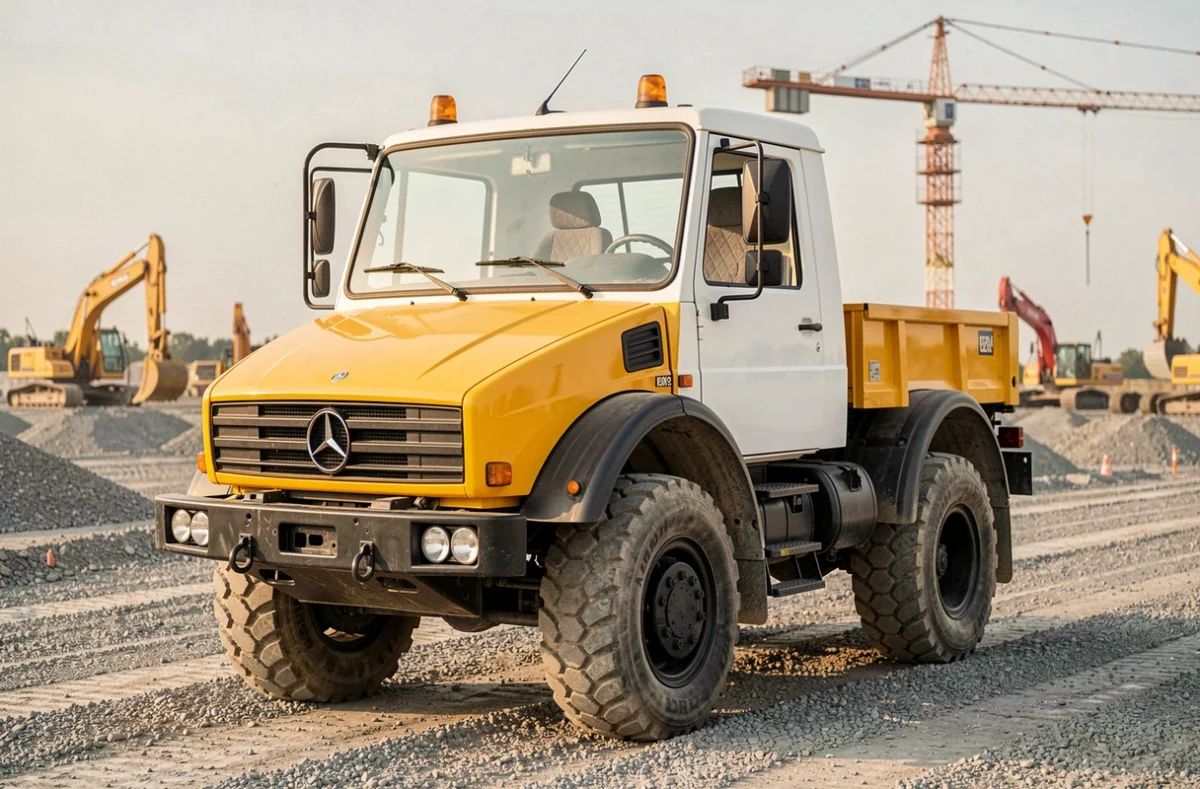
The Mercedes Unimog isn’t bought like a conventional commercial vehicle. Its list price represents only a fraction of the actual budget: the final configuration, tailored to a specific task, determines the bill. Understanding the cost structure means distinguishing between vehicle families, cab types, operational options and the tax implications of commercial use.
Implement carrier or extreme off-roader: two designs, two Unimog budgets
Before considering options or trim levels, the first choice that shapes the budget is the Unimog family. Mercedes-Benz offers two distinct ranges designed for different requirements.
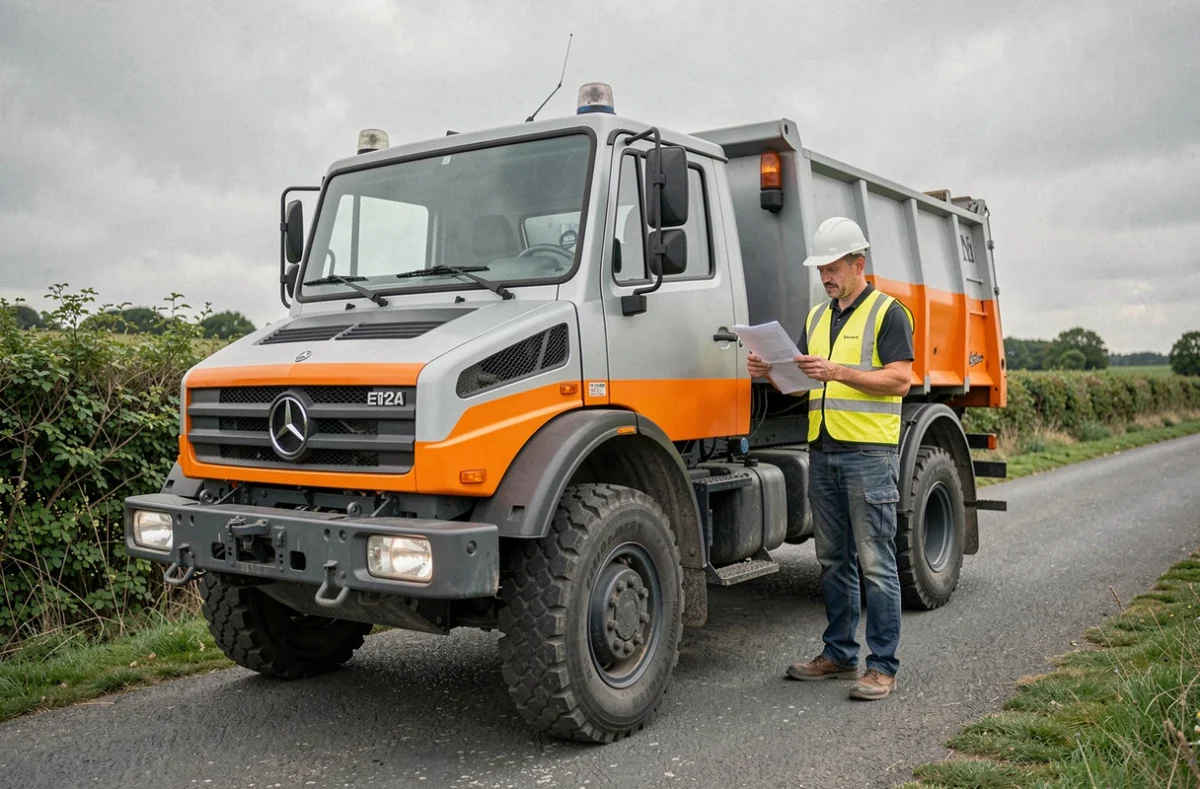
The implement carrier (U 218 to U 530 ranges) is designed for municipal work, mowing, snow removal and road maintenance. Its value lies in its ability to accommodate front and rear attachments, hydraulic power take-offs and interchangeable equipment.
The extreme off-roader (U 4023 and U 5023) is intended for expeditions, remote worksites and civil defence missions. These versions have a rated output of 170 kW and maximum torque of 900 Nm. Their design prioritises traction, off-road capability and the ability to fit a living or technical module.
A detailed guide to the price of a new Mercedes Unimog shows how each family is available in different price configurations depending on the selected equipment.
Comparing an implement carrier with an off-roader based solely on chassis price makes no sense. The budget is determined by the task, not the model.
Cab, chassis and options: what affects the price of a new Unimog
Once you’ve chosen a family, three configuration items can significantly change the quote.
Single cab or crew cab
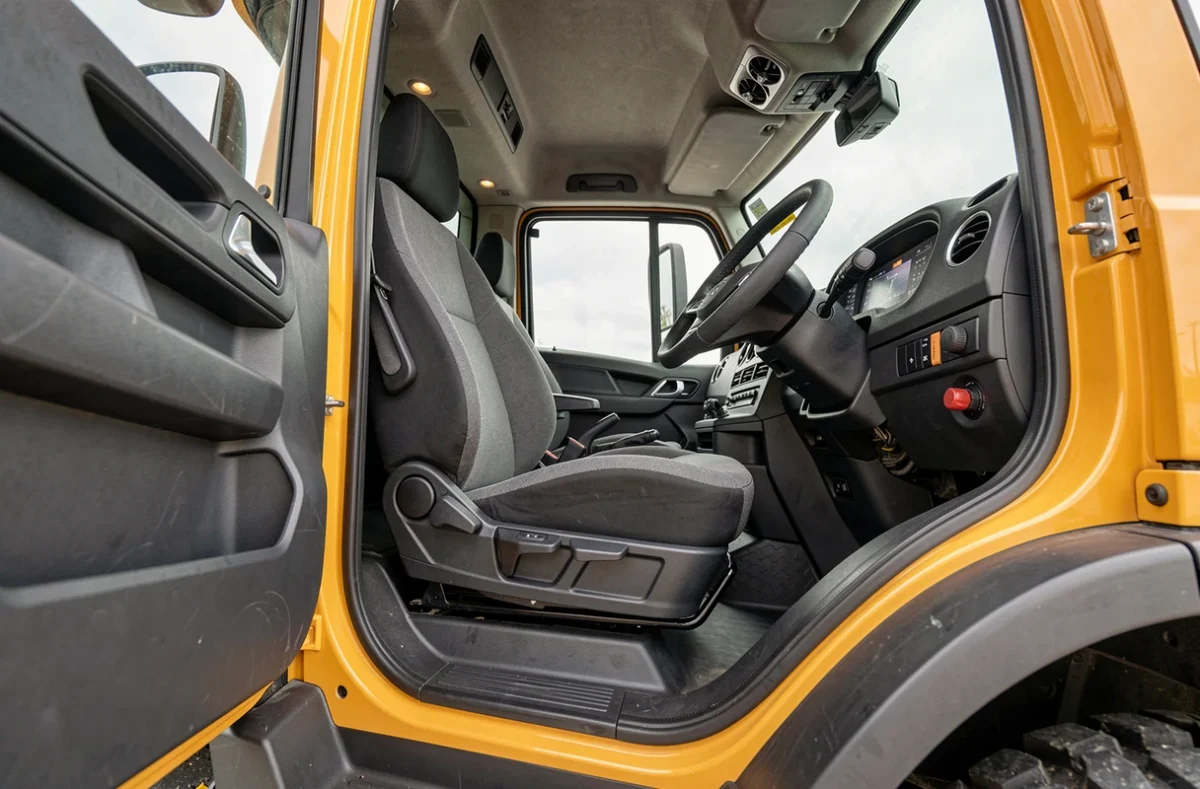
The U 4023 and U 5023 are available with a single or crew cab, with seating for up to seven depending on the version. The crew cab offers more comfort for teams but reduces the space behind the cab available for fittings or attachments. For an emergency response vehicle, this choice affects the usable body length and therefore the type of module or equipment that can be installed.
Operational equipment, not cosmetic extras
The options that affect a Unimog’s budget aren’t comfort or styling features. They’re functional equipment for off-road use:
- The tyre pressure control system, available as an option on off-road versions, lets you adjust grip in real time to suit the terrain.
- Wading depth can be increased to 1,200 mm as an option, compared with the standard 800 mm, significantly changing the vehicle’s mission profile.
- Power take-offs, hydraulic circuits and standardised tool mounts (blades, brushes and cranes) each add a separate cost to an implement carrier.
These items must be explicitly requested when obtaining a quote. A quote that excludes operational options will underestimate the actual budget.
Superstructures and job-specific modifications
The Unimog chassis leaves the factory without a superstructure. The final fit-out (living module, tipper body, snowplough blade or mowing arm) is completed by specialist bodybuilders or integrators. Depending on the complexity of the installation, this can cost as much as the vehicle itself.
Total cost of a delivered Unimog: account for taxes and registration
The budget for a new Unimog doesn’t end when you leave the Mercedes-Benz configurator. Two administrative factors affect the final bill.
In France, the annual heavy goods vehicle tax may apply to certain vehicles weighing 12 tonnes or more when used for business purposes. Whether it applies depends on the vehicle category, its technically permissible maximum mass, the number of axles and the type of suspension. Not all Unimogs are treated the same way: a municipal implement carrier and a privately operated off-road work vehicle may fall into different tax categories.
So you shouldn’t apply a flat rate to the entire range. Checking the registration certificate with the authorities or an accountant is the only reliable way to estimate this cost.
Another often-overlooked variable is delivery and commissioning costs. A Unimog equipped for Alpine snow removal or an expedition vehicle fitted out by an independent bodybuilder may require additional transport and technical inspections, adding to the purchase price.
Unimog budget for 2025: think in terms of mission costs
Asking “how much does a new Unimog cost?” is an incomplete question. The relevant price is for a vehicle ready to work on its intended task, not a bare chassis.
To draw up a realistic budget, start with the end use: what terrain, what tools, what team and how often. The quote should include the chassis-cab, operational options (tyre pressure control, wading depth and power take-offs), the job-specific superstructure and registration-related taxes.
Comparing two Unimog quotes without checking that they cover the same functional requirements means comparing figures for two different vehicles. The only reliable basis for comparison is the total cost of the vehicle delivered, equipped and registered for its actual use.