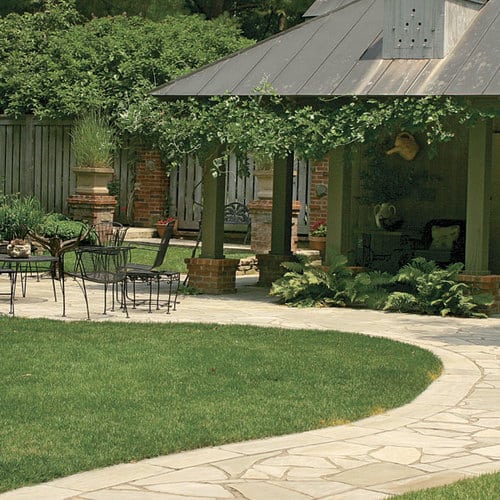
You would believe me if I told you that your choice of paving materials could be the most important decision in building your garden? Think about it: you can sometimes touch a plant, hold a door open, or relax on garden furniture, but your feet are almost always in contact with the surface of your garden. Like plants, paving materials can add color, texture, and pattern to your garden. Unlike plants that grow, bloom, and often sleep as the seasons change, paved surfaces contribute equally throughout the year.
The most widely available paving materials fall into two main categories: quarried stone and composite materials. Quarried stone, such as granite and slate, is excavated and then shaped by splitting, cutting, or crushing. Composite materials like brick and precast concrete pavers are processed and molded while soft, then baked or left to dry.
The wide range of paving materials makes shopping and design fun, but the number of choices can also be a bit overwhelming. Each has its advantages and disadvantages, and some are better suited than others for particular uses and locations. By understanding and exploring your options, you will be able to make the right choice for your environment and budget.
Note: The cost ranges provided are averages for raw materials before installation from suppliers in the United States. Expect some variability from region to region. The cost ranges are based on prices from 2007 but can still be used for relative comparisons of different materials.
Stone
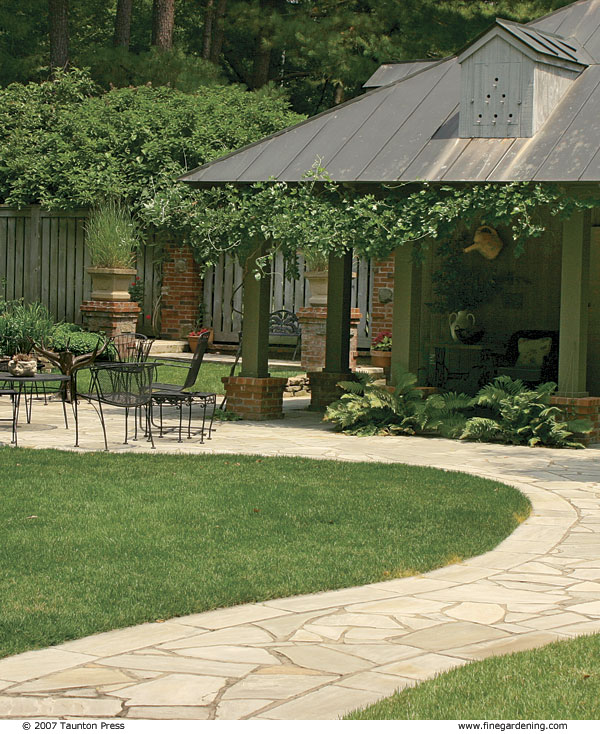 Sandstone:Pros• Widely available• Great range of color• Easy to work withCons• Color variation; BlotchingCost• $3 to $11 per square foot Photo/Illustration: Jennifer Benner
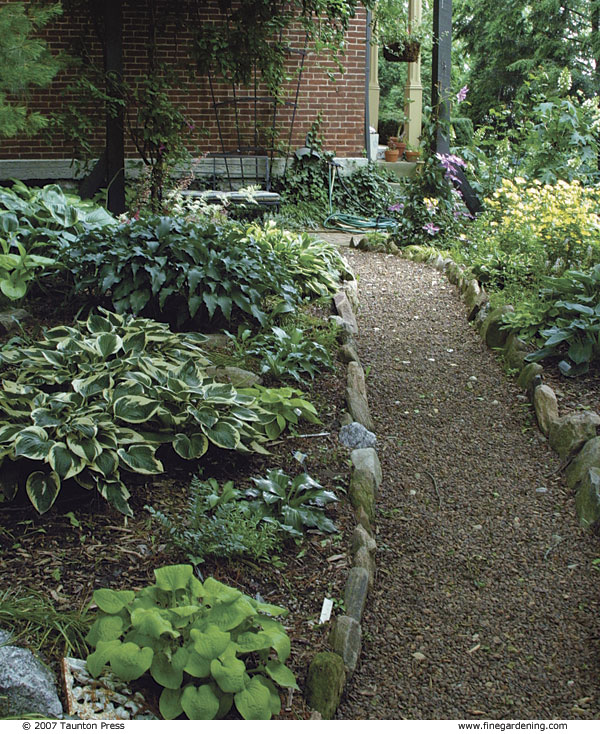 GravelPros• Inexpensive• Attractive texture• Easy to install• Sometimes unstable• Can become WeedyCost • Starting from less than $0.25 up to $1.00 per square foot Photo/Illustration: Jennifer Benner
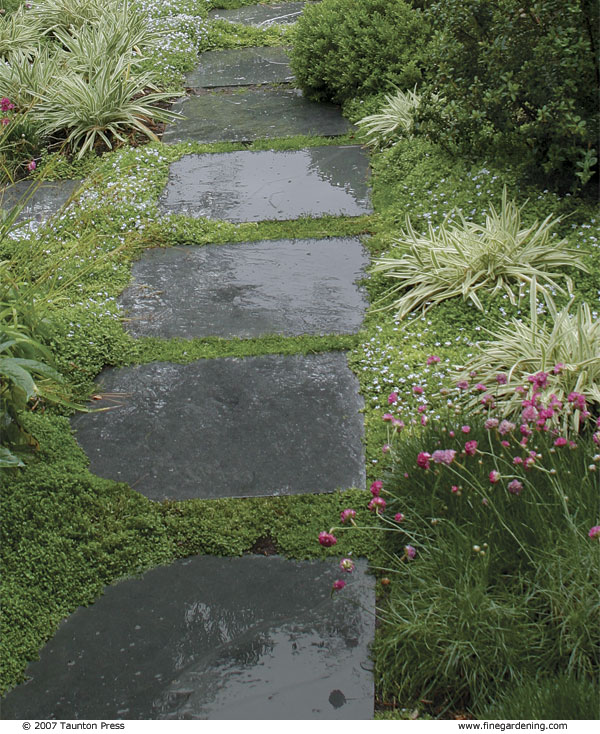 SlatePros• Attractive• Easy to shape Cons• Susceptible to extreme moisture damage • $4 to $7 per square foot Photo/Illustration: Janet M. Jemmott
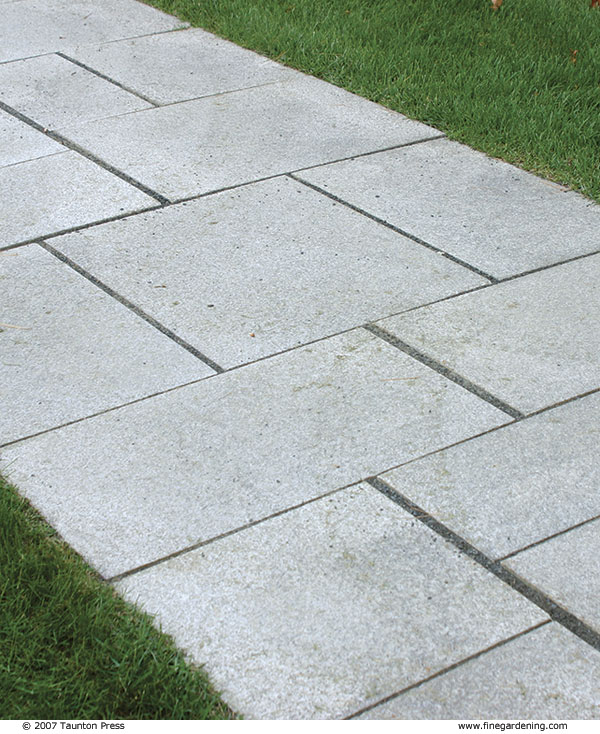 GranitePros• Durable• Huge range of colorCons• Difficult to work with• ExpensiveCost• $8 to $20 per square foot Photo/Illustration: Jennifer Benner
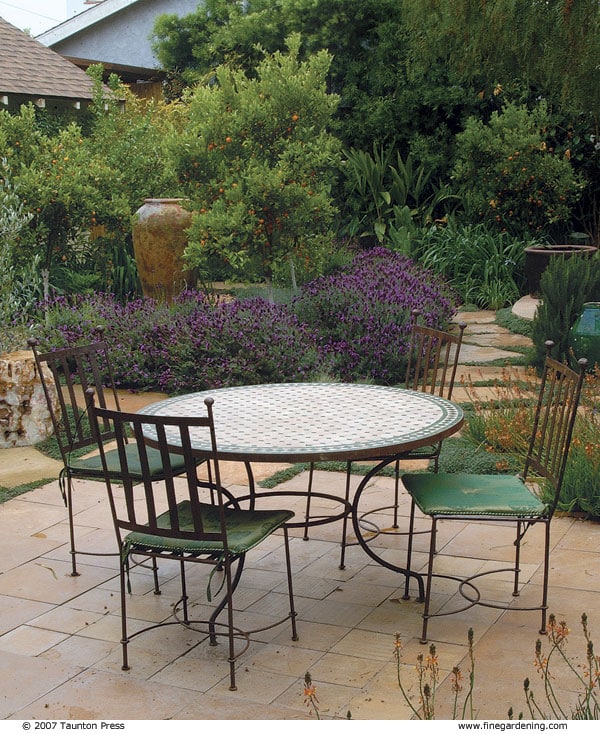 LimestonePros• Uniformly colored• Easy to shapeCons• Limited availability• Few color choices• Susceptible to acid rain• $4 to $20 per square foot Photo/Illustration: Todd Meier
The stone is one of the most nuanced and luxurious paving materials. It is also durable and versatile, offering a vast range of colors, shapes, and sizes. From irregularly shaped slabs for country garden paths to precisely cut geometric blocks for a formal patio, there is a stone for every situation in the garden. All of this, however, comes at a price. Stone can be expensive to purchase and install. The availability and prices of pavers vary from region to region, depending on the quantity purchased and your distance from the source.
There are a few points to keep in mind when purchasing stone for paving. A thickness of at least 2 inches is best for supporting frequent foot traffic and withstanding the whims of installation or weather. Avoid rounded pavers and slabs with a polished or honed finish, which can be hard on the ankles and slippery when wet. Instead, choose flat stones that have a natural cleft surface and offer some grip or texture.
Before making a costly commitment to any material, check its color when wet. That pretty honey-tan granite you love so much could turn a golden orange in the rain. Similarly, a subtle pattern in your sandstone can become objectively bold when accentuated by moisture.
Sandstone is an excellent all-around choiceOne of the most popular stones for garden paving is sandstone. It is sturdy enough for any paving application, but easier to cut and work with than granite, which helps keep its cost down. Sold under descriptive names like “Crab Orchard” (photo below), “Colorado Red,” and “Pennsylvania Blue,” sandstone comes in various shapes and colors and is easy to find in large quantities. Blue-gray and lilac gray are common sandstone colors, but light gray, tan, soft golden cream, and orange-brown can also be found. Expect some color variation in each batch of sandstone, as well as occasional bands or spots of contrasting color in each piece.
Gravel is a great option for a small budgetGravel is easy to install and offers an attractive texture ideal for informal landscapes, short-term paving solutions, and gardens built on tight budgets. The common objections raised against gravel are that it can become weedy and is too unstable underfoot. Weeds can become a problem if the gravel is not maintained, so it’s best to stay on top of them. To avoid foot problems, select gravel labeled “1/4 inch minus”; anything larger risks moving significantly. Also, avoid rounded pea gravel. Sharp, angular, and unwashed gravel will interlock as it settles to form a firm surface that does not spill, rut, or shift. It also helps to pack or compact the gravel, which should be done after laying a 2 to 3-inch deep layer.
Slate stands out for its texture and colorOften used as flagstone, slate has a unique soft texture and subtle color palette that visually attracts people like a magnet. Its pastel blue-gray to muted reds and lavenders are stunning, both to look at and walk on. The same quality that makes slate easy to shape into relatively flat pieces can also limit the durability of this stone as an outdoor paving material. In areas where rainfall is abundant or where freeze/thaw cycles are frequent, slate often flakes and chips. The resulting uneven surface can create puddles in wet weather, freeze in winter, and trip garden visitors in any season. Slate is best in relatively sheltered spots or regions with limited rainfall and mild climates.
Granite cannot be beaten for its strength and durabilityFor pure durability, nothing can beat granite. It is an elegant paving material for formal outdoor spaces and is often sold in cubes or brick-shaped pieces called sets (or cobbles) or as uniformly sized (dimensional) stone. Besides its hardness and durability, granite offers what may be the widest color choice of all paving stones. From light gray to dark gray to blue-gray, brown, honey yellow, green, orange, pink, and red, with or without prominent spots and flecks, the range seems almost endless. The same hardness that makes granite durable also makes it relatively difficult to quarry and work with, so it is generally among the more expensive pavers. Due to the relatively high price, gardeners often use colored granite sets as accents for more economical paving, such as inlay patterns or decorative borders.
Limestone adds a distinctive look to walkways and patiosLimestone is textured, so it takes on a distinctive velvety finish when cut for paving. Its color range is somewhat more limited than granite or sandstone. Dark gray, blue-gray, pale gray, cream, and tan are generally the easiest to find. Limestone tends to be more uniformly colored than sandstone or granite, and its very fine grain makes it relatively easy to cut into all sorts of decorative shapes.
Limestone is rare in some parts of North America, including the Pacific Northwest and California coast, so you can expect its price to be close to that of sandstone or granite, depending on your location. A word of caution about limestone: Its chemistry makes it vulnerable to damage from acid rain, which can cause pitting and promote excessive wear over time. I wouldn’t worry too much unless you live in an area with a serious acid rain problem.
Glossary
Like any specialty, the paving industry has its own jargon. While the meaning of these terms is common knowledge among professionals, they can seem confusing to the average person. Here is a list of frequently used expressions that are handy to know.
Cleavage: the natural surface of a split or “cleaved” stone that has not been finished or honed Pavedstone: natural, rounded stone used for pavingDimensional stone: Precisely cut flagstone milled to a specific size and shape (square, rectangle)Fieldstone: found stone that is naturally split and weathered and comes in a variety of shapes and sizesFlagstone: a stone that is milled or cut to a thin sizePavers or sets: any stone or composite milled into a uniform shape, such as a brick or Belgian blockStone dust or powder: finely graded crushed stone particles commonly used as a base material or bedding for stone and composites
Try Mixing and Matching Materials
 Experiment to create colorful effects. Base tiles, stone, brick, and concrete can come together to form intriguing configurations.
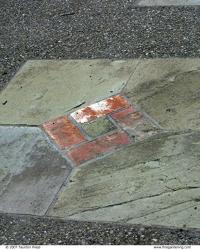 Photo/Illustration: Deana Tierney
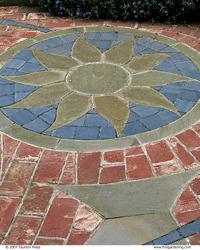 Photo/Illustration: Deana Tierney
To change things up, try mixing materials to develop your own unique and exciting designs. A mix of paving materials offers a range of patterns and textures beyond anything you could achieve with a single type of stone or composite. Something as simple as a brick or granite border can be used to dress up a poured concrete walkway. Or consider using different shades of the same type of stone to transform a common pathway into a dynamic focal point.
Use splashes of various materials to embellish and break up large areas. A row of brick and stone inlays can easily transform a poured concrete driveway from a potential eyesore into a showstopper. Even gravel can be elevated to new heights by adding slabs or accents of precast concrete.
Mixed paving can be more than decorative; it also has important practical applications. Another contrasting paving material or border can alert visitors to changes in elevation in the garden. Multi-level patios in contrasting colors of stone and concrete are not only attractive but also easy to navigate. Using one paving material for patios and another for walkways also helps distinguish gathering places from thoroughfares.
To avoid a busy appearance, I like to limit myself to two or three paving materials in small spaces, perhaps adding a fourth in larger settings. But don’t feel bound by such rules. I’ve seen beautiful small patios featuring abstract and elaborate mosaics of at least half a dozen different stones.
Composite
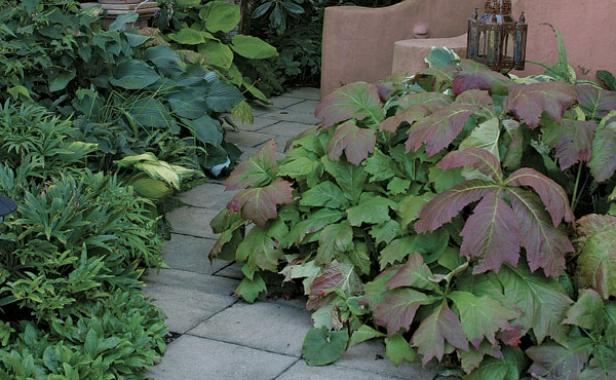 PaversPros• Multiple color and size options• Easy to work with• DurableCons• Sometimes considered inferior to brick or stone• $1 to $12 per square foot Photo/Illustration: Jennifer Benner
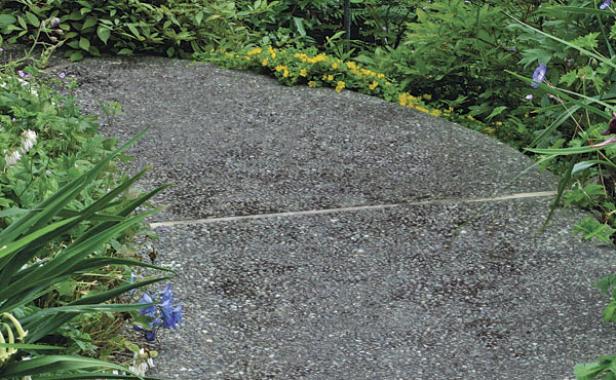 Poured ConcretePros• Durable• DiverseCons• Installation is labor-intensive• Difficult to change• $1 to $20 per square foot
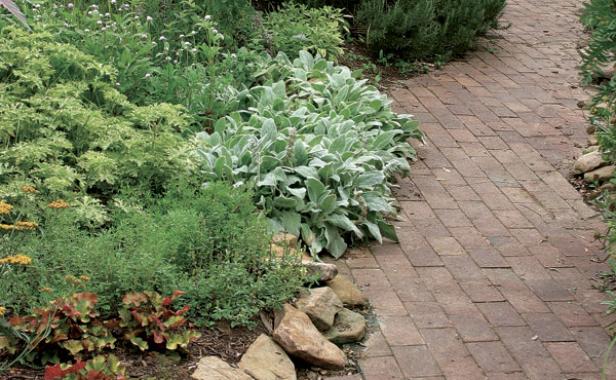 BrickPros• Easy to work with• Widely availableCons• Variable strength and durability• ExpensiveCost• $8 to $20 per square foot Photo/Illustration: Jennifer Benner
As paving materials, composite materials can offer greater flexibility and a wider price range than quarried stone. Being molded to fix dimensions, precast composite materials are often easier to install than stone. One of them, poured concrete, can even take shapes that are practically impossible to build in stone or precast composites. Like quarried materials, composites offer a wide range of colors, textures, and styles.
Whatever your choice of paving material, it is wise to consider the color, texture, and style of the surrounding plants and structures. Make sure you like how your walkway looks next to your house, fence, garden walls, plants, and with all the furniture you will be using. The best method is to borrow or purchase a small amount of paving material and bring it to your garden. Look at it in different lights, positions, and times of day before committing. Paving is not only costly to install and remove, but it is also likely to be the most durable and influential element in your garden.
Concrete pavers won’t break the bank. Once frowned upon by designers for their clumsy attempts to mimic brick or stone, molded concrete pavers are now recognized for their high quality. Whether they proudly proclaim their true concrete nature with attractive aggregates and subtle pigments or disguise themselves as stone or brick, precast concrete pavers can reward gardeners with more textured effects and colors than any other material. Pavers are also available in many shapes and sizes that hold up well over time.
Poured concrete offers plenty of flexibility and options. Poured concrete, especially when reinforced and provided with expansion joints, is one of the toughest and most permanent paving options. It is also one of the most flexible. Concrete can take almost any imaginable shape, and its appearance can vary depending on your choice of aggregates and pigments. Exposed aggregate concrete can look a lot like gravel paving, and all sorts of poured concrete can be sculpted, textured, or inlaid with other materials to suit any design or taste. If you choose to stain your concrete, be sure to see a dry sample of the mix (preferably with the same aggregate you are using) before pouring your paving. Pigments can change dramatically once the concrete hardens, and any mistake will be difficult to correct. The cost of poured concrete is more variable than other paving materials, as a large part of the ultimate expense is related to constructing the forms that dictate its final shape. Concrete itself is generally inexpensive, but labor, trucking, and installation can add up quickly.
Brick feels at home in any settingBrick may be the aristocrat of composite paving materials, but when it comes to garden applications, it is not snobbish. Depending on the type and pattern you choose, brick can also feel at home in a cottage garden or a grand estate. With its warm hues and inviting texture, brick blends well with plants and with almost any other paving or building materials. Its practical size and uniform shape make it relatively easy to design and install, and it is available almost everywhere. Bricks vary in their strength and resistance to the elements, so confirm that your choice is rated for use in paving. Along with stone, brick is among the most expensive paving materials. Even reclaimed bricks, which were once an economical alternative to new materials, have become so popular in some areas that they are no longer a bargain.
Read more at quartierbricole.be