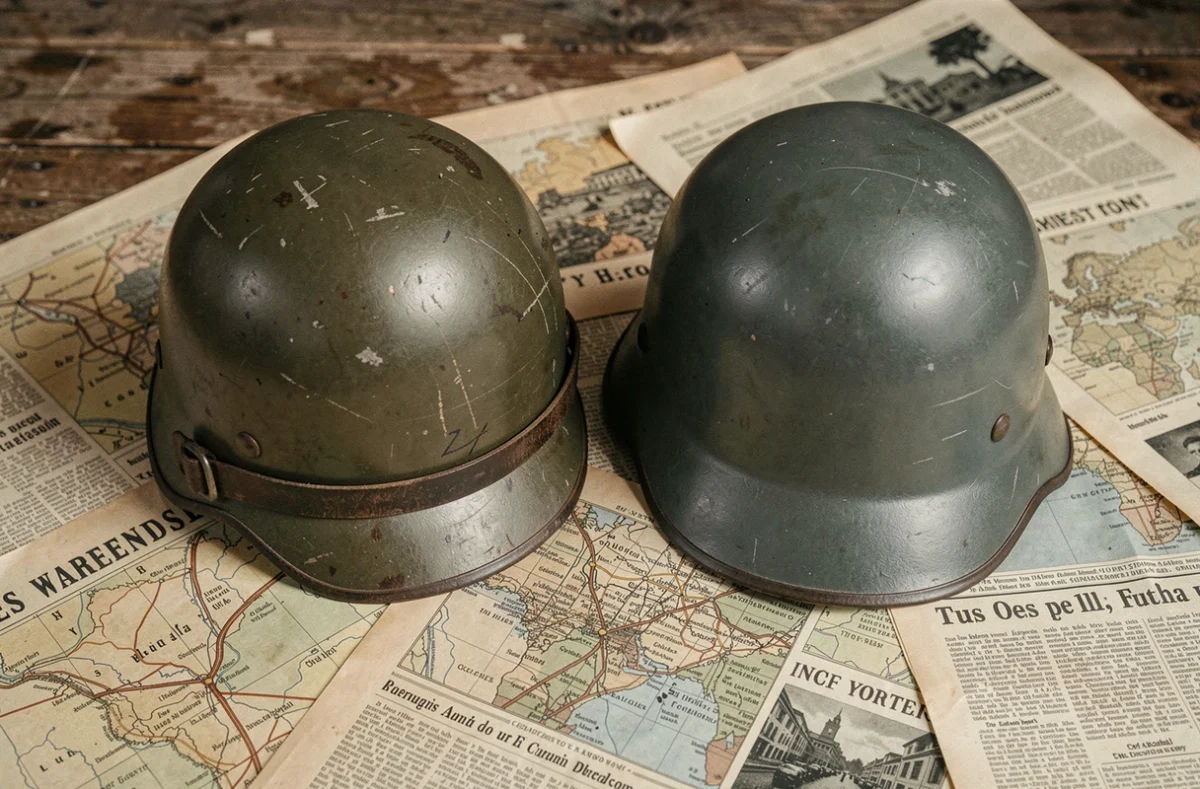
The word “jerry” appears in texts about both world wars, in British military slang dictionaries, and even in everyday vocabulary through the term “jerrycan.” Its origin remains disputed: several theories coexist, and none has won unanimous support among linguists. This etymological uncertainty has not stopped the word from enduring through the century and becoming established in English, then entering French as a loanword.
A British wartime nickname for Germans
British soldiers used “jerry” to refer to Germans collectively. The term appears in sources relating to both world wars and was widely used in accounts and documents from 1939–1945.
One common misconception should be cleared up. “Jerry” as a military nickname is unrelated to the meanings “clumsy” or “poor quality” that the word can have in other registers of colloquial English. As a wartime nickname, it refers exclusively to the German enemy.
The word could be used in different grammatical constructions. “Jerry” could refer to an individual soldier, “the Jerry” to the German army as a whole, and “Jerries” to a specific group. This flexibility helped the term spread through English-language war accounts.
To better understand the meaning of the slang term “jerry”, it is important to distinguish these different levels of usage, from singular to collective.
The etymology of “jerry”: theories and the limits of the evidence
Three etymological theories recur in the literature, but none is supported by documentary evidence strong enough to settle the debate.
The first links “jerry” to the English name Jerry, a diminutive of Gerald or Jerome. British soldiers may have chosen a familiar first name for the enemy, following the same instinct behind “Fritz” (a common German name) or “Tommy,” used to refer to themselves. The existence of the name alone is not enough to prove how it became a collective nickname for Germans.
The second theory derives the word from “German” itself, with its first syllable supposedly altered through phonetic change. This explanation has the advantage of simplicity. However, the dated written records needed to reconstruct this chain of changes are missing from the available corpora.
A third, more marginal theory links the term to the German helmet, which was sometimes compared to a chamber pot (“jerry” was also an old British slang term for a chamber pot). This connection is anecdotal in specialist literature.
Military slang dictionaries offer no indisputable first recorded use that would point back to a single source. The etymology of “jerry” remains an open question in historical linguistics, as there is not enough documentation to favor one theory over another.
From nickname to jerrycan: a slang word enters everyday vocabulary
The jerrycan is the best-documented example of “jerry” making its way into everyday language. This metal fuel container was designed in Germany before the Second World War under the official name Wehrmacht-Einheitskanister.
Allied soldiers who discovered and then salvaged these containers called them “jerry cans,” literally “Jerry cans.” The name of the object preserves traces of its military context: it is neither a neutral technical term nor a brand name, but a label coined by the enemy.
The Allies adopted the German can’s design during the conflict, accelerating its spread. The word “jerrican” later entered French, where it appears in general dictionaries in its French spelling.
- In English, “jerrycan” or “jerry can” is the predominant spelling, with an explicit link to the wartime nickname.
- In French, “jerrican” is the standard form, although “jerrycan” is also commonly used.
- In German, the object was never called “jerry”: in its original terminology, it remains an Einheitskanister (standard can).
Military slang and collective memory: what “jerry” reveals about language in wartime
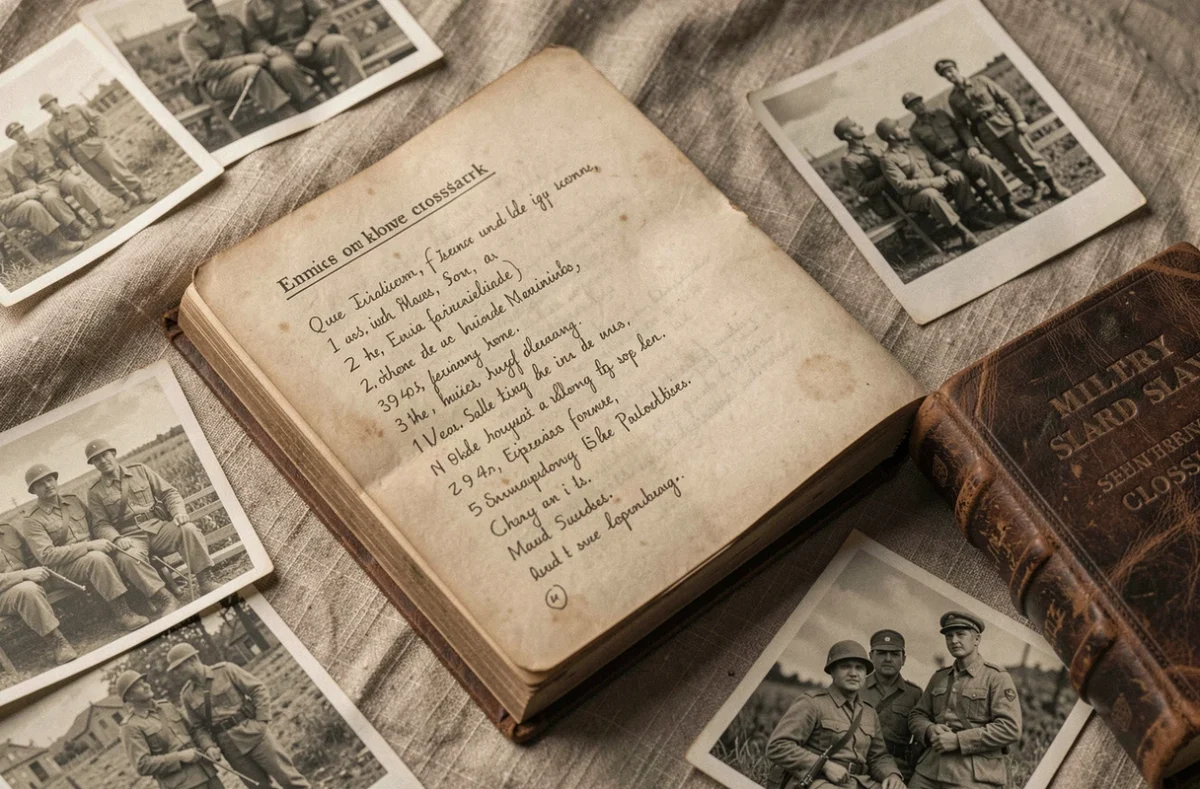
Military slang regularly produces terms that outlive the conflicts they come from. “Jerry” is one of a series of nicknames British and American soldiers gave the enemy. The same phenomenon appears in other languages: the French used “Boche” or “Fritz,” while the Germans called the British “Tommy.”
These nicknames act as a form of partial dehumanization, a linguistic mechanism identified in research on the language of war. Reducing the enemy to a generic first name or a caricatured trait can strengthen group cohesion and create distance from the adversary.
In contemporary usage, “jerry” has lost most of its force. The word appears in historical novels, documentaries, and video games about the Second World War, where it serves more as a period marker than an active insult.
The jerrycan illustrates a different phenomenon. A slang word has become a neutral technical term, stripped of its original connotations. Most French speakers who use “jerrican” do not know that the word contains the nickname for German soldiers. This gradual loss of transparency is characteristic of military loanwords that survive after hostilities end.
The journey of “jerry” encapsulates this process: from a trench-side nickname to a hardware-store staple, the language absorbed, transformed, and eventually neutralized a word born in the vocabulary of war.