Olive oil regularly appears in leather care advice, presented as a natural, affordable solution. This plant-based oil, found in every kitchen, is said to restore suppleness and shine to bags, shoes, and jackets. The reality is more nuanced: depending on the type of leather and how the oil is applied, the result can range from a refreshed appearance to an irreversible stain.
Olive oil on aniline leather, pigmented leather, or suede: very different reactions
Before applying anything to a leather item, the first step should be to check its finish. Pigmented leather, which is coated with a protective layer, tolerates oily substances better than aniline leather, whose porous surface absorbs liquids deep into the material.
On aniline leather, olive oil penetrates quickly and can permanently darken the color. The effect may be subtle or very pronounced, depending on the original shade. Light-colored leather is at greater risk than dark brown leather.
Suede and nubuck are a special case. Their velvety surface is made up of raised fibers that can be flattened by any oily substance. The benefits of olive oil for leather do not apply to these finishes: regular brushing and, if necessary, a product specifically designed for suede and nubuck are the only sensible approach.
Applying olive oil to leather: a method that minimizes risk
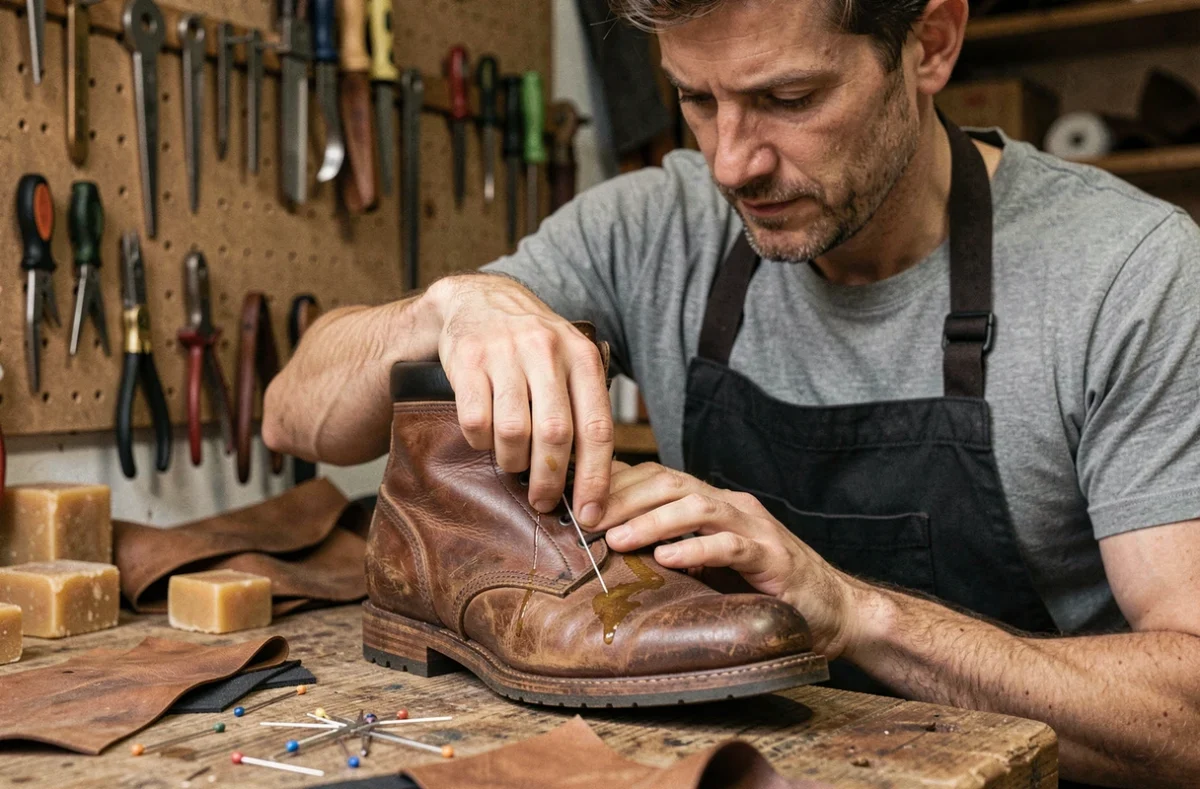
How you apply it matters just as much as the product itself. Applying olive oil directly to the surface can lead to uneven absorption, leaving some areas darker than others. A few precautions can reduce this risk.
- Test it on a hidden area (inside a flap or underneath a strap) and wait at least an hour to see how the leather reacts before treating any visible areas.
- Apply a minimal amount to a soft cotton cloth, never directly to the leather. The cloth acts as a buffer, helping distribute the oil evenly.
- Wipe off any excess immediately with a second clean, dry cloth, then leave the item to air-dry away from any heat source.
Quantity is the most underestimated factor. A few drops are enough for an entire bag. Using too much does not nourish the leather more effectively; it saturates the fibers and leaves a greasy film on the surface that attracts dust.
When leather really needs conditioning: clear signs and frequency
Conditioning leather at fixed intervals, such as once a month, has no technical basis. How often it needs care depends on how it is used, its exposure to the elements, and its tanning method.
Three signs indicate that leather needs conditioning:
- The surface feels dry to the touch and has fine cracks, especially along creases.
- The color has lost its depth and looks dull, even after dusting with a cloth.
- The leather has become stiff and resists bending, even though it was supple when purchased.
Leather that is still supple and shiny gains nothing from an additional oily treatment. Excessive preventive care can clog the fibers and alter the material’s texture.
Common confusion between a grease stain and leather that needs conditioning
An oil stain that has already soaked into leather will not disappear if you apply a layer of conditioner over it. Adding more oil to an oily stain makes it worse. In this case, talcum powder or Sommières earth, left in place for several hours, can absorb some of the remaining oil. This treatment works better on a fresh stain than an old one.
Olive oil compared with dedicated leather care products
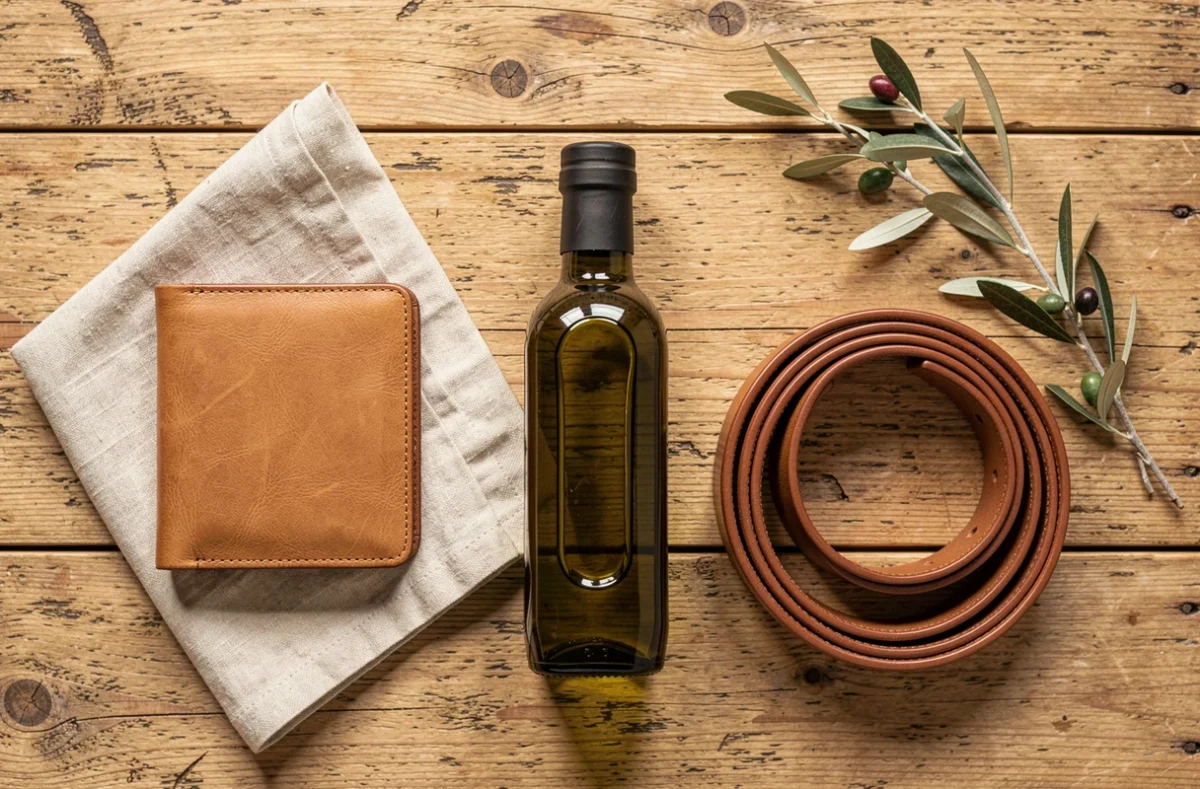
Olive oil was not formulated for leather. Its fatty acid content, particularly oleic acid, can indeed make leather more supple, but it oxidizes over time. Oxidation can cause the oil to turn rancid and leave a lingering odor on treated items, a problem that leather-specific balms and creams do not cause.
Neatsfoot oil and beeswax have long been used in leatherworking and saddlery. Jojoba oil, which is similar to natural sebum, penetrates without leaving a greasy film on the surface. These products have the advantage of being tested on different leather finishes, with results documented by craftspeople.
Olive oil remains an acceptable stopgap for pigmented leather in good condition, provided you follow the method described above. For a valuable item (a designer bag, a full-grain leather jacket, or upholstered furniture), a leather care product formulated for the specific finish offers greater peace of mind.
Storage and environment: what damages leather faster than a lack of care
Leather stored properly ages better than leather that is conditioned frequently but stored poorly. Direct heat (a radiator or a car trunk in summer) dries out the fibers faster than any neglect of routine care. Prolonged dampness encourages mold growth.
A well-ventilated closet away from direct sunlight protects leather better than monthly conditioning. Breathable fabric covers (cotton or linen) are preferable to plastic bags, which trap moisture. For bags, tissue paper stuffing helps maintain their shape and prevent permanent creases.
Leather care follows a simple principle: do as little as possible, at the right time, with the right product for the right finish. Olive oil can serve as an occasional treatment for pigmented leather, but it is no substitute for a routine suited to each item’s material.