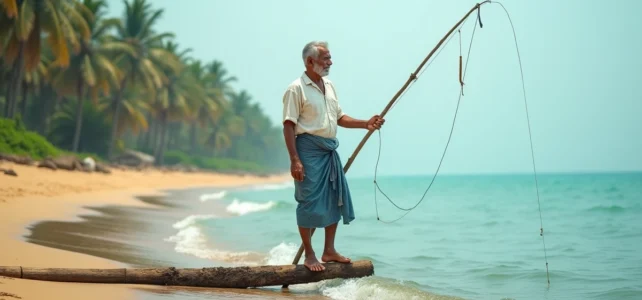
Sri Lanka occupies a unique position on the world map: an island shaped like a drop hanging just below the southern tip of India, in the Indian Ocean. This location, between historic maritime routes and monsoon corridors, has shaped both the country’s biodiversity and the diversity of its landscapes.
Comparing the geographical and climatic data of Sri Lanka with those of its regional neighbors allows us to measure what makes this island so rich in contrasts over a modest area.
Recommended read : Discover the bio and origin of Patrick Paroux, an essential French actor
Coordinates and geographical data of Sri Lanka compared to its neighbors
To locate Sri Lanka in relation to other destinations in the Indian Ocean, a comparative table highlights the differences in size, distance from the equator, and relief.
| Criterion | Sri Lanka | Maldives | Mauritius |
|---|---|---|---|
| Area | 65,610 km² | A few hundred km² | About 2,000 km² |
| Distance from the equator | About 645 km north | Close to the equator | Southern hemisphere, below the tropic |
| Highest point | Over 2,000 m | A few meters | Less than 1,000 m |
| Average annual temperatures | 27 to 28 °C | 28 to 30 °C | 20 to 28 °C |
| Monsoon regime | Two distinct monsoons | Two seasons (dry/wet) | Wet southern summer |
The difference in relief is immediately striking. Where the Maldives peak at a few meters, Sri Lanka stacks coastal plains, tea-covered hills, and summits exceeding 2,000 m. This relief explains the variety of landscapes concentrated on an island that remains smaller than many French regions.
See also : The latest news and trends not to miss in France and around the world
To accurately visualize where Sri Lanka is located on the world map, one must look just below the southeastern tip of India, separated from the subcontinent by a strait of barely a few dozen kilometers.
Cultural triangle and southern coast: two Sri Lankas on the same island
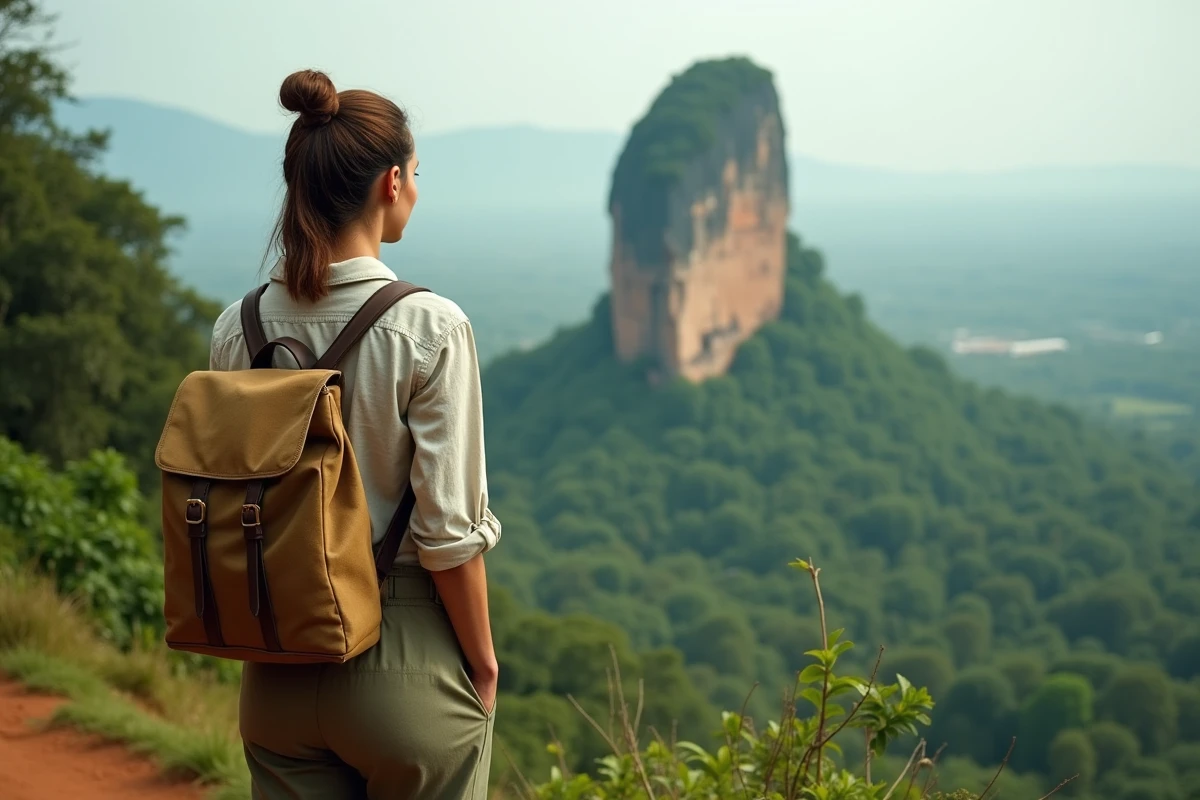
Most tours in Sri Lanka revolve around two poles. The cultural triangle, in the central-north, concentrates UNESCO-listed sites: Sigiriya, Dambulla, Kandy. The beaches of the south and west (Galle, Bentota) attract travelers seeking coastline.
These two areas do not share the same climate, altitude, or visitor density. The country benefits from two staggered monsoons, allowing for visits to Sri Lanka almost year-round by adapting one’s itinerary.
Kandy and the tea plantations in the highlands
Kandy, the former royal capital, is nestled in the hills of the island’s center. Beyond, the heights rise towards Nuwara Eliya and the vast tea plantations that have made the former Ceylon famous. Temperatures drop significantly below the national average, providing a striking contrast with the coastal beaches.
A classic route connects Kandy to the Temple of the Tooth, then climbs towards the plantations before descending to the coast. This vertical crossing of the island, over a few hundred kilometers, summarizes the country’s diversity.
Galle and the southern coastline
Galle, a fortified port listed as a World Heritage site, marks the entrance to the southern coast. The beaches stretch for dozens of kilometers. The southern coastline concentrates the majority of Sri Lanka’s beach offerings, with calmer waters between November and April.
North and East Sri Lanka: emerging itineraries
Sri Lankan authorities and European tour operators are now highlighting regions that have long been less visited. Jaffna, in the far north, and Trincomalee, on the east coast, are presented as the new stops on the 2025-2026 tours.
- Jaffna offers a distinct Tamil culture, colorful Hindu temples, and a spicy cuisine different from the rest of the island
- Trincomalee features still little-frequented beaches, ideal for travelers seeking tranquility
- The beaches on the east coast benefit from an inverted dry season (from April to September), complementary to the west coast
This geographical rebalancing of tourist flows addresses a concrete issue. The overcrowding of Yala National Park has led to the promotion of alternatives like Udawalawe or Wilpattu for observing elephants and leopards. Some recent tours replace Yala with these less saturated parks, with comparable animal density according to specialized operators.
Sustainable tourism in Sri Lanka: an ongoing official strategy
Since the period 2022-2024, Sri Lanka has positioned itself as a hub for sustainable tourism in the Indian Ocean. The strategy involves several measurable axes.
- Environmental certifications for some hotels in the country
- Gradual limitation of single-use plastics
- Promotion of less frequented national parks to reduce pressure on wildlife
- Group tours deliberately limited (some tour operators cap at 24 people per group)
This approach concretely alters the visitor experience. Smaller groups allow for smoother access to UNESCO-listed sites like Sigiriya, where the waiting line to climb the rock can significantly lengthen during high season.
In contrast, the north and east of the country do not yet have hotel infrastructure as developed as the cultural triangle or the southern coast. Travelers who choose these routes find preserved authenticity but must accept sometimes more basic comfort.
What geographical data reveals
Sri Lanka compresses 65,610 km² a range of landscapes that other countries spread over much larger territories: rice plains, tropical forests, mountain ranges, coastal mangroves, coral reefs. This density of biomes, combined with the double monsoon regime, explains why the island attracts both high-altitude hiking enthusiasts and divers or safari lovers.
The geographical position of Sri Lanka, at the crossroads of maritime routes between Southeast Asia and East Africa, has also shaped its history and cultural diversity. Buddhist temples, mosques, colonial churches, and Hindu shrines coexist on a territory that can be traversed in a few hours by road. This compactness remains the country’s primary asset for travelers who have two to three weeks.