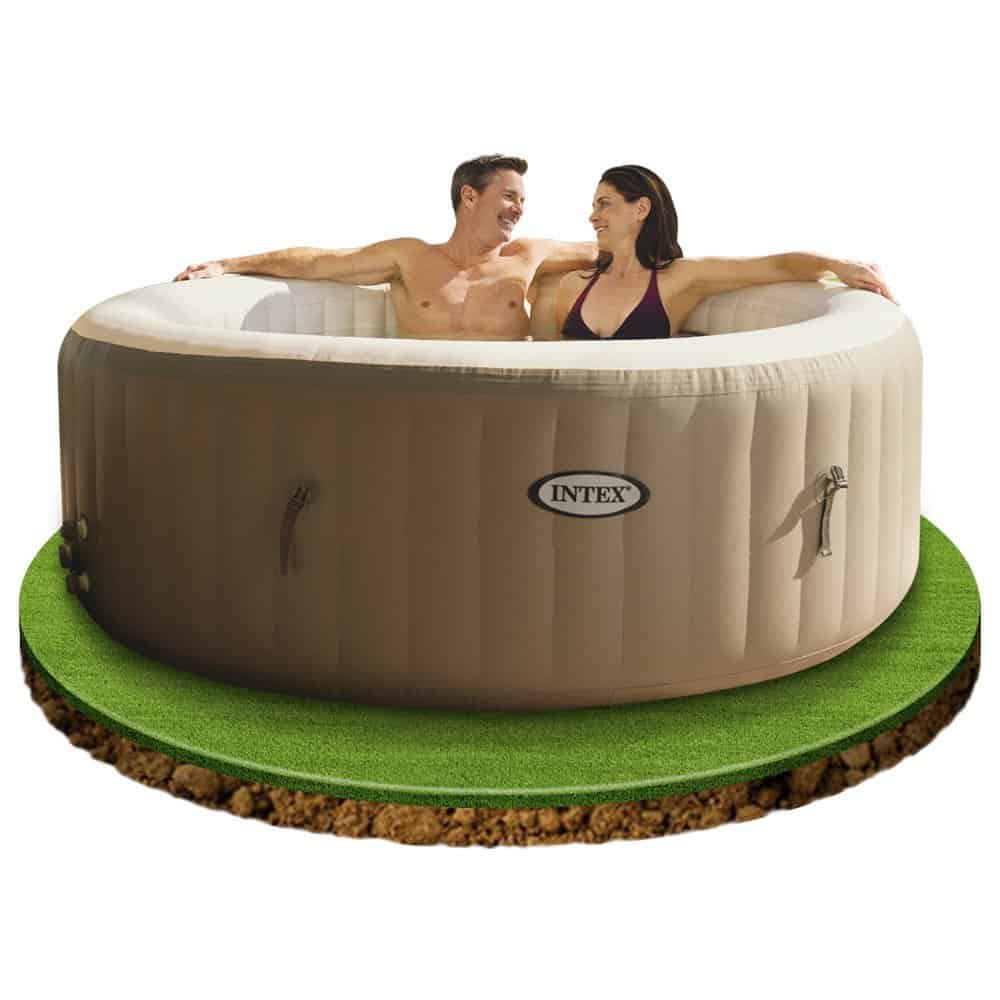
Anyone who has had the chance to test a spa knows how good you feel afterward: relaxed and at ease. If you suffer from aches and pains of various origins, including arthritis, then hot water and jet massages can be really beneficial in helping to calm your symptoms. In recent years, things have really changed in the world of inflatable home spas. Now, there is a very wide range of portable inflatable bathtubs to choose from. Many of the best inflatable spas can provide an almost authentic spa experience.
To assist you in your research, we have gathered information that should help you make a purchase you won’t regret!
In a hurry? Direct access to our comparison of the best inflatable spa moments
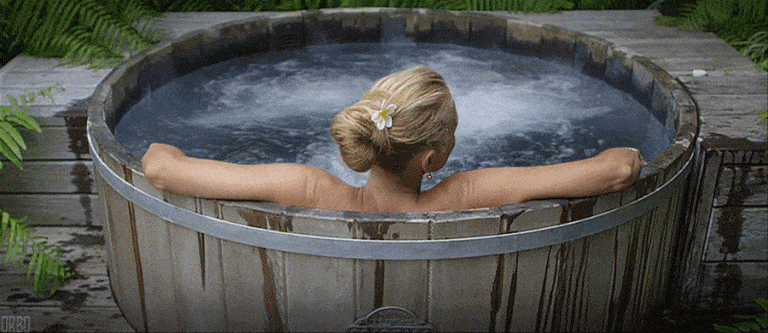
Guaranteed relaxation and tranquility!
If you are an athlete, half an hour of stretching in the bubbling water will be a perfect recovery moment for your body.
If you are used to using the spa at your gym, you know that the worst part is going home. You just had a good workout, a nice hot spa, but you have to go home (sometimes in the cold). Does that sound familiar?
It is therefore even more enjoyable to have an inflatable spa at home, to use whenever you want, for as long as you want, and especially with whom you want.
However, few people are ready or can afford to bring spa builders into their homes and spend over ten thousand euros to build a hard spa.
This is why inflatable spas are so appealing; you don’t have to go through all that. All you have to do is unpack, pump, plug in, refill with water, heat it up, and enjoy your device.
So here is everything you need to know before choosing the inflatable spa that suits your needs!
Summary
- What is the difference between a hot tub and a spa?
- 14 precautions to take before using an inflatable spa
- 9 things not to do in a spa
- How to choose the right location for your inflatable spa?
What is the difference between a hot tub and a spa?
Like a spa, a hot tub is equipped with built-in jets that provide heat, relaxation, and a massage effect on muscles and joints.
Both are used for therapeutic and relaxing reasons.
In the early 1960s and early 1970s, hot tubs were made of wood, including cedar, redwood, cypress, teak, or composite.
By the mid-1970s, ultra-modern portable acrylic spas were introduced to the market, replacing wooden bathtubs.
Hot tub or spa?
Today, the terms spa and hot tub are interchangeable.
Both describe a large tub that is used for relaxation, hydrotherapy, heat, and entertainment.
Both are equipped with built-in jets to target bathers’ sore muscles.
Essentially, there are two types of hot tubs and spas: portable or inflatable and custom or built-in.
Portable models can accommodate up to two to eight adults. They can be made of inflatable latex or vinyl, usually cheaper, fiberglass, acrylic, polyethylene, or any other type of plastic.
Some spas are built from traditional wood or even recycled materials, such as metal tubs or barrels.
In-ground or custom styles are most often referred to as spas. They can be attached to an in-ground pool or adjacent to a pool and designed to provide a kind of hot and cold experience or workout and relaxation.
Others are freestanding bathtubs, but installed in the ground or custom-built.
Some are robust portable models (non-inflatable) from high-end manufacturers that are installed in the ground or can be placed on a raised platform, sometimes under a pergola.
Others are custom-built and often made with the same materials as pools, such as concrete, fiberglass, as well as stainless steel, tiles, or copper.
Some spas are customized with a pool and are located in the pool itself, making it easy to transfer heat from the tub to the cooler waters of the pool.
The word spa is often associated with a spa destination or a commercial establishment where clients can also receive beauty treatments, massages, facials, and other relaxation services.
The term spa is more specific in describing this hot and bubbling bath and has seen a resurgence in use to distinguish it from a day spa.
Small inflatable spas that accommodate 2 to 3 adults and are designed for fewer measure 90 to 120 cm high by 150 cm wide and hold about 1500 liters of water. Larger spas have a height of 120 to 150 cm and a diameter of 180 cm or more and are built to accommodate up to 11 adults. They hold about 3000 liters of water.
14 precautions to take before using an inflatable spa
If you are lucky enough to own an inflatable or hard spa, or a spa, you probably know all the dos and don’ts inside and around these devices, such as safety or maintenance issues. How long can you swim in a hot tub? Can you drink two glasses of wine, but no more? A little sand in the inflatable spa won’t hurt, right? Will children be fine in the spa as long as an adult is around?
We help you examine 14 not-so-stupid things to know before stepping into this steam bath.
01 Consult your doctor
People with diabetes, high blood pressure, heart disease, or other cardiovascular conditions should consult their doctor before using a spa. The same applies to any medical condition: don’t just visit a medical website online — get your doctor’s consent.
02 Take a shower
Always take a shower first with soap and water to reduce the risk of contaminating the spa water and minimize health risks. Lotions, oils, and other products help accumulate in your spa. In cold climates, it is not recommended to drain it. So avoid the extra cost of a potential repair bill by rinsing before and after. Moreover: isn’t it nice to step into a really clean tub?
03 Limit your soaking time
Limit your soaking time to a maximum of 15 to 20 minutes at a time. Cool off, then return to your inflatable spa if you wish.
04 Ventilate your spa
If an inflatable spa is indoors and poorly ventilated, some users may experience slight throat and eye irritation. Ventilate naturally or mechanically using an exhaust fan. Find a place other than the spa compartment to store chemicals.
05 Limit alcohol consumption
Despite all the stereotypes we see in movies and hear about, spas and drinks do not go hand in hand.
Avoid drinking alcoholic beverages before or during spa use. Alcohol can make you drowsy and lead to drowning.
Anyone taking prescription medications or certain over-the-counter medications should consult their doctor before using a spa.
Enjoy your inflatable spa, then put on your best robe and sip your glass of wine sitting by the fire.

06 Consult your doctor if you are pregnant
Pregnant women should consult their doctor before using a spa.
07 Secure long hair
People with long hair should tie it back to prevent it from getting caught or dragged into the filter or drain. As a responsible owner, your spa should be equipped with drains or drain covers according to good practices.
08 Install and use handrails
Handrails and non-slip surfaces will help minimize the risk of slipping and falling. Remember that wet surfaces can be slippery. Be careful when entering and exiting the spa. Enter only by the spa steps. Do not walk or climb on the edges of the spa or filter covers.
09 Install a protective cover
Your pool, spa, or hot tub should be equipped with a protective cover when not in use. This will prevent a tragedy.
10 Use the cover
Use the thermal cover when the spa is not in use, whether empty or full.
11 Ask guests to leave if they cannot follow the rules
Ask people to leave if they do not want to behave safely.
12 Test the water before entering
Test the water with your hand before entering the spa to ensure it is comfortable and not too hot.
13 Ensure the spa is connected to a circuit breaker.
Ensure the spa is connected to a ground fault protected circuit breaker. This circuit breaker must be installed by a licensed electrician.
14 Remove contact lenses
Remove contact lenses before swimming or entering a hot pool. Despite all the chemicals present in the water, wearing lenses exposes you to an increased risk of serious eye infection. Additionally, they can get hot.
9 things not to do in a spa
Do not use alcohol or drugs
Sorry to be the bearer of bad news, but drinking and spas do not mix well.
Despite all those movie scenes depicting characters lounging in spas with their favorite drink in hand, doctors do not recommend it.
Sports stars and politicians are known to drink while having fun in a spa, but that doesn’t mean we should follow their example.
The same caution should be used with medications — check with your doctor before soaking in extremely hot water while taking a prescription.
One reason is that alcohol and certain drugs (prescription and recreational) can cause drowsiness.
Check the water temperature before entering the tub, stick to reasonable time limits (10 to 15 minutes), enter slowly, and exit the tub if you feel dizzy or to avoid falls.
Injuries and spas
People with open wounds or any other type of infection treatment should not use the spa.
Hot water is an ideal environment for spreading infection, especially if disinfectant levels are not well maintained.
The same applies to rashes and other injuries. Consult a doctor for the green light before returning to your inflatable spa.
Can you get pregnant in a spa?
Don’t let anyone convince you otherwise. Be smart, prepare, and use contraception if you think you might have sex in a spa.

Is it me or is it hot in here?
Not at all: overheating in a spa can cause trouble.
The latest spas have a factory maximum temperature of 40°C. Most users find that 37°C to 39°C is a comfortable and therapeutic level.
Higher temperatures can put excessive pressure on the cardiovascular system. Be sure to monitor the temperature accurately.
Children and Spa
Be vigilant and ensure that children are supervised at all times in spas. Parents and caregivers should never — even for a moment — leave children alone near open water, such as lakes or pools, or near water in homes (bathtubs, spas), according to child safety recommendations.
Spas and hot tubs are dangerous for young children who can easily drown or become overheated.
The risk of drowning a young child should be taken seriously. Children can drown in just a few inches of water, and many do so every year. Probably the greatest drowning danger occurs when a child climbs unnoticed into an unsecured or unsupervised spa.
This is why spas are a constant source of danger. Like pools, spas must be properly fenced or covered, and an open bath should never be left unattended by an adult, even for a minute or less.
Spa Games
Playing horse in a spa is a bad idea.
At first, it’s quite harmless: a little flirting, teasing, and water games.
Everyone becomes a child in the water, and some occasional games can quickly escalate, with someone getting hurt.
In the limited space of a spa, there is no room to contain the action. Yes, it can be fun, but someone can easily slip, bump their head, twist an ankle, etc.
Do not attempt to jump or dive into an inflatable spa, hard spa, or spa. Climb in gently; do not allow anyone to run or play while you are in or near the spa.
Spas and protective covers
All pools and spas must be equipped with a safety cover.
Storms and spas
Never use your spa in extreme weather conditions (thunderstorms, tornadoes, hurricanes, etc.). Go indoors and reschedule your evening.
Do not soak alone
Although relaxing, soaking in a spa is not a good idea.
If you have been drinking, taking medications, have high blood pressure, low blood pressure, or any other medical condition, it would be wise to wait for a companion to join you for soaking if necessary. Consult a doctor.
How to choose the right location for your inflatable spa?
Hot tubs and inflatable or standalone spas can go wherever you want, near a pool, on a patio, in a corner of the yard, or even indoors.
When choosing the ideal spot for your tub, think about how often you will use it.
Due to its size and temperature, a spa can be enjoyed year-round; for some, it’s a smarter choice than a pool.
The right location for the right use
Although it can be placed practically anywhere, if you have a pool, it makes sense to install it nearby.
When it’s cool, swimmers enjoy swimming in the hot tub and appreciate the short walk it takes when it’s by the pool.
From a plumbing and electrical standpoint, it is also wise to place a pool and spa close to each other.
Also consider the convenience of your home, especially at night or in winter, when a long trip from the spa to the house becomes even longer when you are wet and it’s freezing outside.
Sun, shade, and weather
Whether you live in a warm climate or four seasons, it is advisable to consider weather conditions when choosing the location of your spa.
Ideally, a spa should be placed in a south-west facing spot to maximize daylight hours.
If you live in a desert region, a spa facing north or east (or northeast) may be preferable, as it will provide relief from the sun, even during the coldest winter months.
Those living in northern regions where summers are quite cool should consider installing a spa to enjoy southern exposure to receive as much sun as possible. This will help reduce the cost of heating the spa.
Wind
Another important consideration is wind: too much wind can make sitting on the edges of the spa almost unbearable; too little wind can overheat everyone and make the area stagnant.
If possible, it is best to find a middle ground. A shelter and fence can also help reduce the intensity of a windy spot.
Privacy
What you do in your spa is your business, but no one wants it to be located in a spot that can be fully or even partially in view of neighbors.
Think about it: if you are surrounded by two-story houses, your neighbors may be looking down and witnessing what is happening in your inflatable spa.
Keep this in mind when searching for the right spot at home.
If your privacy is important, consider building a pen or placing it in a similar structure with curtains that can be closed or opened.
Strategic landscaping can also make the spa more private without having to shelter it in a separate structure. Vines, shrubs, and small trees can be placed around the spa to ensure privacy from all angles.
Safety
Ensure that the spa has a properly installed cover to prevent incidents or tragedies if unsupervised children are nearby. If you have children or grandchildren, place the spa so that it is visible from both inside and outside. Install handrails for safely entering and exiting the spa.
in your inflatable spa.
Keep this in mind when searching for the right spot at home.
If your privacy is important, consider building a pen or placing it in a similar structure with curtains that can be closed or opened.
Strategic landscaping can also make the spa more private without having to shelter it in a separate structure. Vines, shrubs, and small trees can be placed around the spa to ensure privacy from all angles.
Safety
Ensure that the spa has a properly installed cover to prevent incidents or tragedies if unsupervised children are nearby. If you have children or grandchildren, place the spa so that it is visible from inside and outside. Install handrails for safely entering and exiting the spa.
Tag: install a spa or jacuzzi