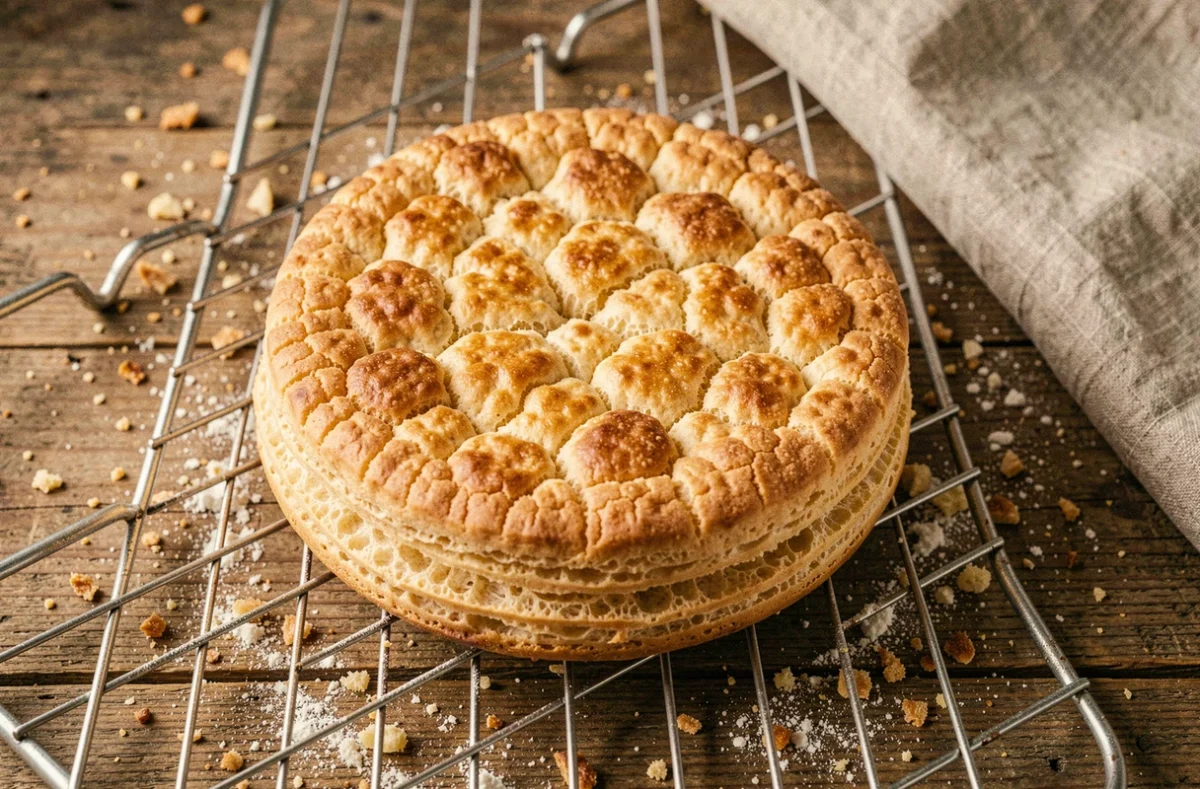
A crispy biscuit for cake bases relies on a precise balance between fats, sugar, and moisture. Most online recipes focus on the praline-chocolate-crispy crepe mixture, but they often overlook the main issue: the loss of crunchiness after assembly. Understanding the mechanisms that preserve or destroy the texture of a crispy base radically changes the final result.
Moisture Migration: The Real Enemy of the Crispy Biscuit
A crispy cake base does not soften due to a bad recipe. It softens because water migrates from the moist layers (mousse, cream, insert) to the dry layer. This phenomenon begins as soon as the entremet is assembled.
Biscotti can lose their crunch within hours in a humid kitchen. When placed in direct contact with a chocolate mousse or milk cream, an unprotected crispy layer absorbs water by capillarity and loses its texture in less than a day.
To counter this migration, professionals use a hydrophobic barrier. Cocoa butter serves as a technical barrier against softening: mixed with praline before adding the feuilletine, it forms a waterproof layer that slows down moisture transfer. Dark or milk chocolate plays a similar role due to its fat content, but pure cocoa butter offers more neutral flavor protection.
Several pastry chefs who work on entremets assembled the day before apply this method, then store the crispy layer in the freezer before assembly. The crystallization of cocoa butter in cold reinforces the rigidity of the layer and prolongs the crunchiness after defrosting. You will also find easy recipes on Toutes Les Recettes that detail this process step by step.
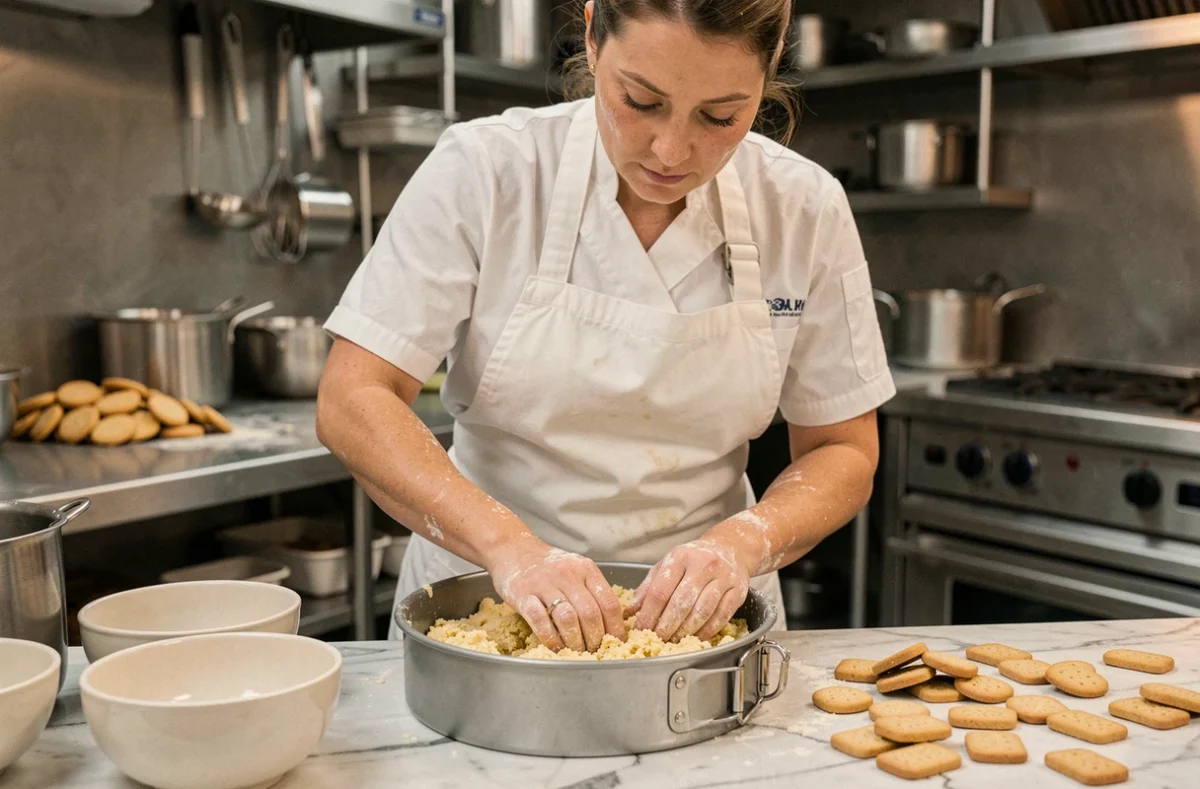
Thickness and Crystallization: The Parameters of a Regular Base
The thickness of the crispy layer determines both the mechanical stability and the mouthfeel. If too thin, it breaks during unmolding. If too thick, it creates excessive contrast with the mousse and complicates cutting.
Smoothing the crispy layer to 3 mm thick is the benchmark used in professional production. This measurement allows for a homogeneous layer, strong enough to support the weight of the entremet without cracking, while remaining pleasant to the bite.
The method involves spreading the still-soft mixture between two sheets of guitar paper or parchment paper, then allowing it to crystallize at room temperature (or in the refrigerator to speed up the setting). The discs are then cut to the exact dimensions of the circle or entremet frame before they have completely hardened, preventing splintering.
The Role of Feuilletine and Its Substitutes
Feuilletine (or crushed crispy crepes) provides the honeycomb structure that creates the crunch. However, it quickly absorbs moisture if not coated with fat. There are a few alternatives:
- Reconstituted crumble: crumbs of shortcrust pastry baked dry, mixed with praline and melted chocolate. The result is more rustic, with a more pronounced grain than feuilletine.
- Toasted coconut: roasted dry in the oven, it replaces feuilletine in a coconut-praline crispy layer. Roasting reduces moisture content and enhances flavors.
- Gavottes or crushed dry biscuits: an accessible option for those who cannot find feuilletine in stores. The result may lack finesse but works well in a layer cake.
Regardless of the substitute, the rule remains to coat each dry element with fat before assembly. It is this lipid layer that protects the crunchiness.
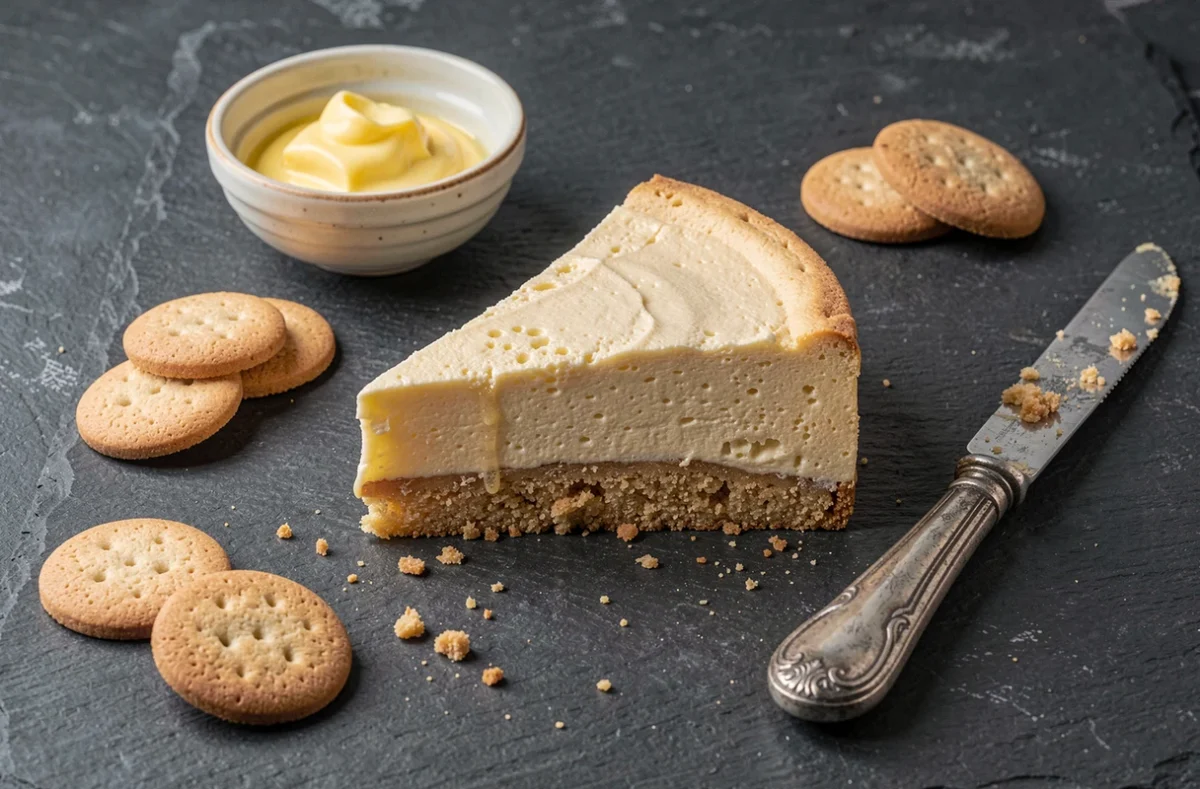
Homemade or Industrial Praline: What Changes in the Crispy Base
Praline is the aromatic binder of the crispy layer. It brings the flavor of caramelized hazelnuts or almonds, as well as a portion of the fat that structures the whole.
An industrial praline generally contains a standardized proportion of nuts and sugar, with a smooth and even texture. A homemade praline, made by caramelizing hazelnuts or almonds and then grinding them, offers a more intense flavor but a less homogeneous texture. A coarsely ground praline makes the crispy layer grainy and fragile.
For a cake base, the texture of the praline is as important as its flavor. A fine grinding (until slightly oily) allows the praline to blend with melted chocolate without creating dry pockets. Field reports vary on this point: some pastry chefs prefer a medium-coarse praline to maintain some chewiness, while others aim for a fluid paste to facilitate spreading to a constant thickness.
Chocolate and Praline Dosage
The ratio between chocolate and praline directly influences the hardness of the crispy layer once crystallized. The higher the proportion of chocolate, the stiffer and more brittle the layer will be. The more praline dominates, the softer and stickier the texture will be.
A common balance in professional recipes relies on similar proportions between praline and chocolate, adjusted according to the type of chocolate used. Milk chocolate gives a softer crispy layer than dark chocolate, due to its dairy fat content that delays crystallization.
Storage of the Crispy Biscuit: Freezing and Storage
A praline-feuilletine crispy layer can be stored for several weeks in the freezer, provided it is wrapped tightly to avoid condensation when reheating. Condensation is the primary cause of softening after storage.
In the refrigerator, the shelf life is shorter. An unprotected crispy layer softens within hours when in contact with moist elements. For an entremet served the next day, assembling the cake the day before and storing it in the freezer remains the most reliable method to preserve the texture.
- Freezer: wrap tightly, store flat, take the cake out a few hours before tasting.
- Refrigerator: assemble at the last moment or protect the crispy layer with a thin layer of tempered chocolate.
- Room temperature: to be avoided beyond a few hours, especially in summer or in a humid kitchen.
The crunch of a cake base is primarily about managing moisture and the rigor of assembly. A simple recipe, with praline, chocolate, cocoa butter, and feuilletine, is enough to achieve a professional result, provided the thickness, crystallization, and storage are respected. The rest is a matter of taste.